CS2 Counter-Strike 2 weapon skins inventory background

Blog

Najnowsze artykuły o ekwipunkach CS2, cenach skinów, rynkach i strategiach tradingowych.

SkinsMonkey - CS2 skin trading platform

CS2 Gallery Case: All 17 Skins, Kukri Knife & Drop Rates

2 lata temuCS2 Gallery Case: All 17 Skins, Kukri Knife & Drop Rates
CS2 Gallery Case: Complete Guide to All Skins and Rare Drops

The CS2 Gallery Case dropped on October 2, 2024, as part of The Armory update — 17 community-designed weapon skins, a Kukri Knife as the rare special item, and enough variety across rarity tiers to appeal to collectors, casual openers, and traders alike. If you want to know exactly what's in the case before spending money on keys, this guide breaks it all down. You can also check your CS2 inventory value to see how Gallery Case skins sit within your overall portfolio.

The short answer on whether it's worth opening: decent ROI for a newer case, strong Covert skins, and the Kukri Knife is locked to just two cases right now. The longer answer is below.

Gallery Case Drop Rates and Rarity Breakdown

The Gallery Case follows the same drop odds every CS2 weapon case uses. No surprises here:

  • Mil-Spec (Blue) — 79.92% drop chance — 7 skins
  • Restricted (Purple) — 15.98% drop chance — 5 skins
  • Classified (Pink) — 3.20% drop chance — 3 skins
  • Covert (Red) — 0.64% drop chance — 2 skins
  • Kukri Knife (Gold) — 0.26% drop chance — 13 finishes

Most openings land in Mil-Spec territory. That's just how it works — 4 out of every 5 keys you spend will produce a blue-tier skin. Worth knowing before you get excited and buy 20 keys at once. For a deeper look at how rarity affects what a skin is actually worth, our guide to CS2 skin rarity and value covers the full picture.

Covert Skins (Red) — The Gallery Case Headliners

Two Covert skins at 0.64% combined drop rate. These are what most people are chasing.

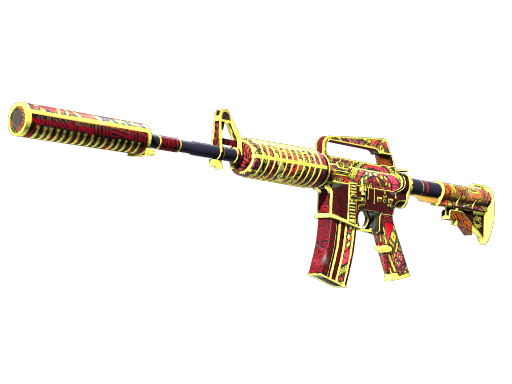
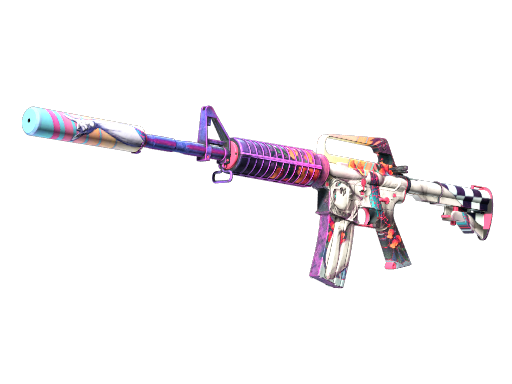
M4A1-S | Vaporwave

The M4A1-S Vaporwave is the one everyone talks about. Retro-futuristic pastel gradients, nostalgic design language — it reads as a deliberate throwback to early-2000s aesthetics, and it works. Factory New copies carry a premium on the Steam Community Market, and demand has stayed consistent since launch. If you open a Gallery Case and land this, you've had a genuinely good outcome.

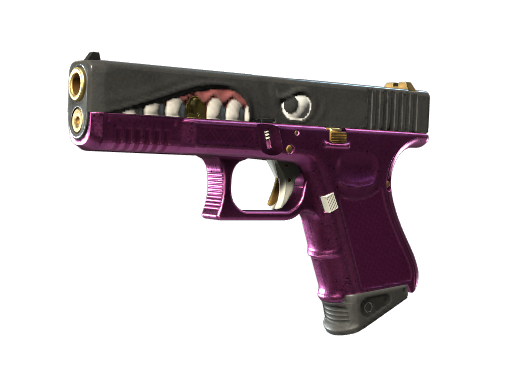
Glock-18 | Gold Toof

The Glock-18 Gold Toof goes in a completely different direction — bold street-art styling, gold accents, aggressive energy. It divides opinion more than the Vaporwave does, but that's fine. Polarizing skins often hold value better than generic ones. The Glock's position as CS2's default CT pistol keeps it permanently relevant in the market.
Classified Skins (Pink) — High-Demand Gallery Case Drops

At 3.20%, Classified skins are the tier where you occasionally get lucky without needing knife-level luck. These three are solid, and the Neo-Noir in particular has a recognizable series pedigree. Worth noting for players trying to build an impressive skin showcase.

UMP-45 | Neo-Noir

The UMP-45 Neo-Noir continues the series that started with the AWP and M4A4 versions — dark, high-contrast comic-book artwork with that signature femme fatale character. Collectors who already own the other Neo-Noir pieces tend to want this one for completeness. SMG skins generally trade lower than rifle equivalents at the same rarity, but the Neo-Noir branding carries real weight.

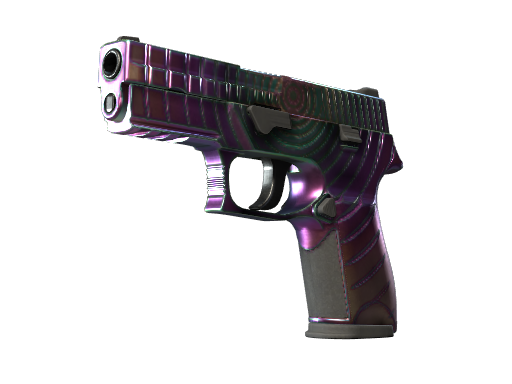
P250 | Epicenter

The P250 Epicenter uses geometric radiating patterns to give a budget pistol an almost architectural feel. Clean, dynamic, and the kind of skin that looks better in-game than in screenshots.
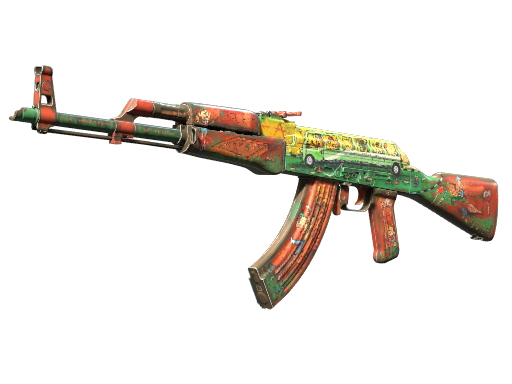
AK-47 | The Outsiders

The most desirable Classified drop in the case, and it's not particularly close. AK-47 skins punch above their weight in the market because the rifle appears in almost every round of every match. The Outsiders has a raw, counter-cultural aesthetic that fits the weapon better than polished designs sometimes do. If you're opening the Gallery Case hoping for a Classified, this is the one worth landing.
Restricted Skins (Purple) — Gallery Case Mid-Tier Finishes

Five Restricted skins at roughly 16% drop rate. You'll see plenty of these. Some are genuinely interesting designs — the MAC-10 Saiba Oni is the standout here — and several trade comfortably at prices that make them worth keeping rather than immediately selling.

SSG 08 | Rapid Transit

The SSG 08 Rapid Transit takes a transportation-themed approach to the scout rifle, giving it a clean urban feel that reads as distinctly different from the military aesthetic most sniper skins default to.

P90 | Randy Rush

Colorful and energetic — the P90 Randy Rush fits the personality of the SMG. Not subtle, but the P90 isn't a subtle weapon.

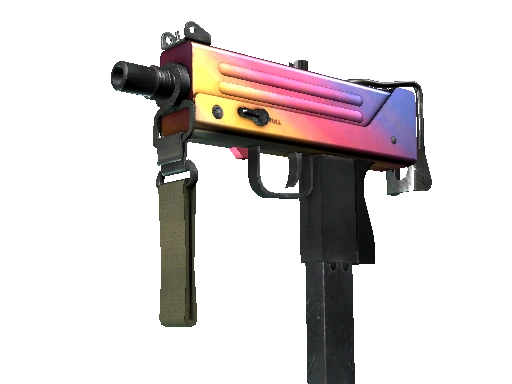
MAC-10 | Saiba Oni

The best Restricted skin in the Gallery Case, in my view. The MAC-10 Saiba Oni blends cyberpunk and Japanese oni mythology into something that genuinely feels cohesive rather than thrown together. The red-on-dark color scheme photographs well and looks even better in motion. Community-designed skins sometimes feel derivative — this one doesn't.
Dual Berettas | Hydro Strike

Water-themed patterns flowing across both pistols simultaneously. The Dual Berettas Hydro Strike gets points for visual consistency across a weapon that's inherently hard to design for — matching patterns on two separate guns is trickier than it looks.

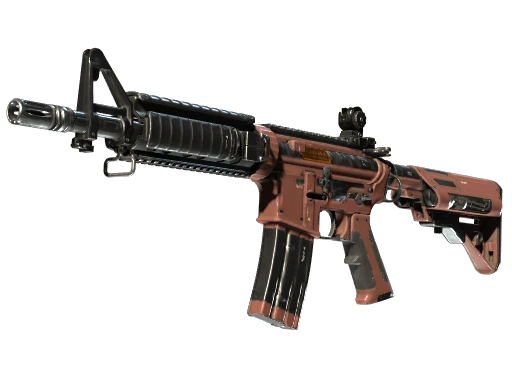
M4A4 | Turbine

Mechanical, industrial, engineered. The M4A4 Turbine leans into the rifle's hardware-as-machine aesthetic. Subtle compared to some of its case-mates, which might actually be what makes it appealing to players who want a skin that doesn't scream for attention.
Mil-Spec Skins (Blue) — Affordable Gallery Case Collectibles

Seven Mil-Spec skins at nearly 80% of all openings. Most of what you pull from the Gallery Case will land here. The community-designed quality control is still evident at this tier, though — these aren't throwaways. Several trade for enough to partially offset key costs on a good day.

SCAR-20 | Trail Blazer

R8 Revolver | Tango

M249 | Hypnosis

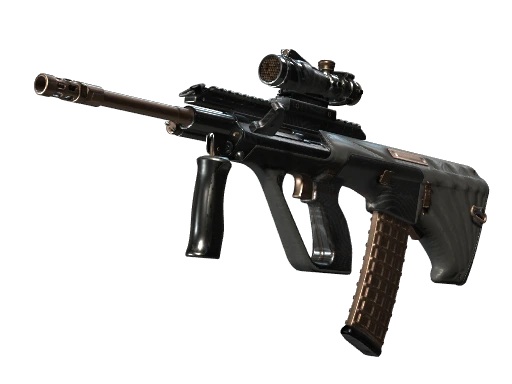
AUG | Luxe Trim
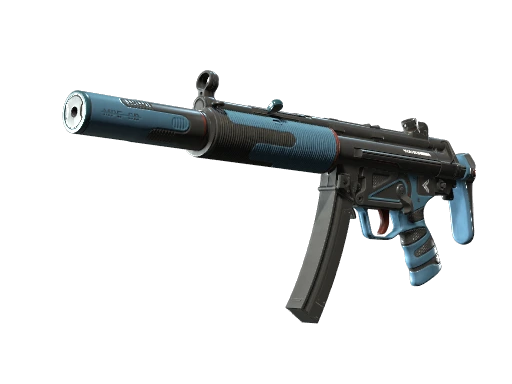
MP5-SD | Statics
Desert Eagle | Calligraffiti

USP-S | 027

Gallery Case Kukri Knife — The Rare Special Item

The Kukri Knife sits at roughly 0.26% drop chance — meaning on average you'd need to open around 385 cases before landing one. That's the math. In practice, some people get one in their first hundred; others go 700 without seeing gold. Variance is brutal at this tier.

What makes the Gallery Case Kukri particularly interesting is scarcity. The knife was first introduced with the Kilowatt Case, and right now it's only available from these two cases. That supply constraint keeps prices elevated across all 13 finishes.

Speaking of finishes — the spread in value is enormous:

  • Kukri Knife | Fade — Full Fade patterns regularly exceed $1,000. The float range and fade percentage both matter significantly.
  • Kukri Knife | Case Hardened — Blue Gem patterns command extreme premiums. Even a partial blue on the blade adds meaningful value.
  • Kukri Knife | Crimson Web — Web pattern placement drives value here. A centered web on the blade is meaningfully worth more than a scattered one.
  • Kukri Knife | Doppler — Multiple phases available. Phase 2 (mostly sapphire-blue) and Phase 4 (black pearl effect) are the most sought after.
  • Kukri Knife | Slaughter — Diamond and angel patterns are what collectors track. The rest trade more modestly.
  • Additional finishes include Tiger Tooth, Marble Fade, Vanilla (no finish), and several others.

For pattern-specific pricing across all knife finishes, our complete CS2 knife patterns guide goes into the kind of detail that actually affects buying and selling decisions.

Is the CS2 Gallery Case Worth Opening?

Roughly 69% ROI per 1,000 openings is the number that gets cited, which sounds alarming until you realize that's one of the better ratios among currently active cases. At under $3.50 per opening (case price plus the standard $2.49 key), the Gallery Case competes well against older cases where the case itself costs $5+ before you've even bought a key.

The honest take: no single case opening session is likely to be profitable. That's not unique to the Gallery Case — it's how all CS2 cases work. The expected value math always favors holding rather than opening, unless you specifically want the skins or enjoy the process. If profit maximization is your goal, buying Gallery Case skins directly from the Steam Market will almost always beat opening cases for them.

That said, if you're going to open something, the Gallery Case has a reasonable argument for it:

  • Strong Covert tier — The M4A1-S Vaporwave holds solid market value and stays desirable
  • Kukri Knife exclusivity — Limited to two cases, which floors the price in a way that more widely distributed knives can't claim
  • Community-designed quality — All 17 weapon finishes came from the Steam Workshop, which generally produces more creative, distinctive work than internal designs
  • Case price — Still reasonably priced relative to cases that have been in the pool longer

Our best CS2 cases guide for 2025 ranks the Gallery Case in the upper tier of current options. And for a fuller breakdown of what case opening actually costs versus returns, the ultimate CS2 cases and rare drops guide has the numbers.

Methodology

ROI figures here reflect a same-day comparison of the historical case price (Steam Market median when the Gallery Case dropped) and current key cost against the Steam Market median sale price for each possible drop, weighted by the published Valve drop odds. The ~69% ROI per 1,000 openings number reflects expected value on liquid Steam Market sales — it excludes sticker premiums on rare crafts and any Buff163 cross-market arbitrage, since neither reflects the depth a typical opener can liquidate into. Drop-rate figures (0.64% Covert, 0.26% knife) are from Valve's published case mechanics and are not derived.

How the Gallery Case Fits Into the CS2 Armory System

The Gallery Case arrived as part of The Armory update, which changed how Valve distributes new cases. The traditional model — random case drops during play — got supplemented with a credit system that lets you specifically select which case you want to unlock. That's a meaningful shift. You can target the Gallery Case intentionally rather than hoping it appears in your weekly drops.

For collectors focused on community-designed skins, this matters. The Armory system effectively gives you agency over which case pool you're pulling from, which changes how you'd think about building a set of Gallery Case skins over time. As CS2 case openings continue growing, the Gallery Case has settled into a consistent position in the active rotation — popular enough to keep case prices competitive, exclusive enough on the Kukri Knife to maintain knife value. Both are good signs for people holding Gallery Case inventory.

CS2 Kilowatt Case: All Skins, Kukri Knife & Guide

2 lata temuCS2 Kilowatt Case: All Skins, Kukri Knife & Guide

CS2 Kilowatt Case: Complete Guide to Every Skin and the Kukri Knife

The Kilowatt Case is the first weapon case ever built specifically for Counter-Strike 2 — not ported over from CS:GO, not a legacy drop, but a proper CS2 original. Released on February 6, 2024 as part of the "A Call to Arms" update, it shipped with 17 community-designed weapon skins, 13 Kukri Knife finishes, and something nobody expected: a rental system. You need a Kilowatt Key to open it. That rental system alone would have been enough to make this case memorable, but the lineup itself is strong enough to stand on its own. If you're trying to figure out whether opening it makes sense for you, our guide on profitable case openings has the numbers you need.

Why the Kilowatt Case Has a Place in CS2 History

Being the first CS2 weapon case matters more than it sounds. Look at what happened to the original CS:GO Weapon Case — it started as a common drop and now sits at prices that would have seemed absurd a decade ago. Early cases tend to appreciate once they leave the active drop pool, and the Kilowatt Case stacked up several other firsts on top of that:

  • The Kukri Knife, a curved blade that had never appeared in Counter-Strike before
  • The first Zeus x27 skin ever — the Zeus Olympus, which turned an almost comedic weapon into a collector's piece
  • The skin rental system, letting you try a skin for a week before deciding to buy permanently

That combination — historic status, a new knife type, and a feature no other case has replicated — makes this one worth paying attention to even if you're not a dedicated collector. If you want to track how your collection is doing over time, you can check your CS2 inventory value anytime.

Kilowatt Case Rarity Tiers and Drop Rates

Before you open anything, know what you're actually rolling:

One knife drop in roughly 385 cases. That's the reality. Most openings land you a Mil-Spec blue worth less than a dollar. That's not a criticism of the Kilowatt Case specifically — that's just how CS2 case economics work. For a deeper look at what actually drives skin prices beyond rarity, our guide on how CS2 skin float values really work is worth a read.

Covert Skins (Red Rarity)

Two skins at 0.64% combined. Both hold serious market value.

AK-47 | Inheritance

The Inheritance is the headline skin of this case. The design work is detailed and layered — the kind of skin that photographs well in screenshots and looks even better in motion. It competes directly with the most iconic AK-47 skins the game has ever seen, which is a high bar. Factory New copies regularly command premium prices on the Steam Market, and that gap between FN and Field-Tested is unusually large here. If you're evaluating it against other options for the AK slot, our list of the 5 best AK-47 skins in Counter-Strike 2 has context.

AWP | Chrome Cannon

Holographic, reflective, and unmistakably modern. The Chrome Cannon sits in the upper tier of AWP skins — not as historically significant as the Dragon Lore or Asiimov, but arguably more visually interesting than most. Prices in the hundreds of dollars for clean floats. The finish holds up well at higher wear conditions too, which isn't always the case with holographic designs.

Classified Skins (Pink Rarity)

Three skins at 3.2% combined. Solid value, more accessible prices than the Coverts.

M4A1-S | Black Lotus

Dark artwork, elegant lines, and a design that doesn't scream for attention the way some skins do. The Black Lotus tends to appeal to players who want something premium without the in-your-face aesthetic. It's one of the stronger M4A1-S options available, full stop.

Zeus x27 | Olympus

This one is genuinely historic. The Zeus x27 had existed in Counter-Strike for years without a single community skin — it was just the default taser that everyone bought as a joke round option. Then the Kilowatt Case shipped the first-ever Zeus skin, and suddenly people were collecting a weapon they'd never thought twice about. Mythological motifs, clean execution. The collector demand is real.

USP-S | Jawbreaker

Bold candy-inspired artwork in bright, saturated colors. Not subtle. If you play a lot of pistol rounds and want something that stands out, the Jawbreaker delivers.

Restricted Skins (Purple Rarity)

Five skins at ~16% combined. Good designs, reasonable prices.

Glock-18 | Block-18

Pixelated, retro-tech aesthetic on the Glock. It reads as deliberately quirky rather than accidental. Popular among players who want something recognizable without paying Classified or Covert prices.

M4A4 | Etch Lord

Engraving-style artwork that covers the rifle body in clean, deliberate patterns. Understated compared to the Classified skins above, but that restraint is the point. M4A4 players who prefer their skins to look like they were crafted rather than painted will appreciate this one.

Sawed-Off | Analog Input

Wires, circuit boards, voltage meters. The Analog Input fits the electrical theme of the Kilowatt Case better than almost anything else in the lineup. It's a niche weapon with a niche skin — but if you're someone who plays Sawed-Off, this is your skin.

Five-SeveN | Hybrid

Organic and mechanical elements mixed into a sleek pistol design. The Five-SeveN Hybrid doesn't have a gimmick — it's just a well-executed skin at an accessible price point.

MP7 | Just Smile

Cheerful, colorful, completely unserious. The Just Smile earns its name. Good for SMG players who don't want their loadout to feel oppressive.

Mil-Spec Skins (Blue Rarity)

Seven skins making up ~80% of all drops. These are where most openings land. They're also useful for trade-up contracts if you're trying to work your way toward Restricted-tier skins.

MAC-10 | Light Box

Neon-lit nightclub aesthetic. The MAC-10 gets an unusually good skin here for Mil-Spec rarity.

SSG 08 | Dezastre

Chaotic, bold artwork on a weapon that usually gets forgettable skins. A decent eco-round option if you want your budget sniper to look like it means business.

Dual Berettas | Hideout

Urban, stealthy design across both pistols. Coherent with the Kilowatt Case's overall aesthetic.

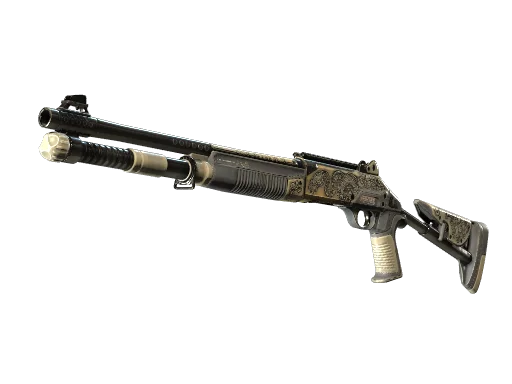
XM1014 | Irezumi

Japanese tattoo-inspired patterns on an automatic shotgun. Irezumi as a design language works surprisingly well here — the organic flow of traditional tattoo art suits the curves of the XM1014.

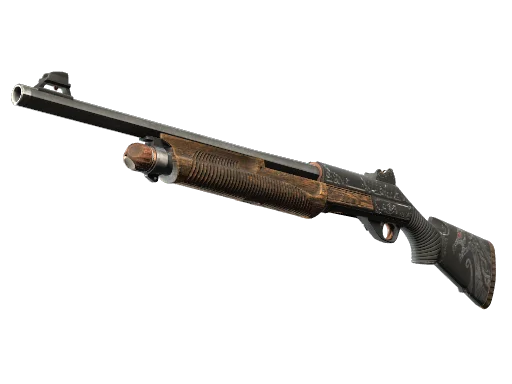
Nova | Dark Sigil

Arcane symbols, dark palette. The Nova is not a weapon people tend to invest in, but the Dark Sigil gives it personality.

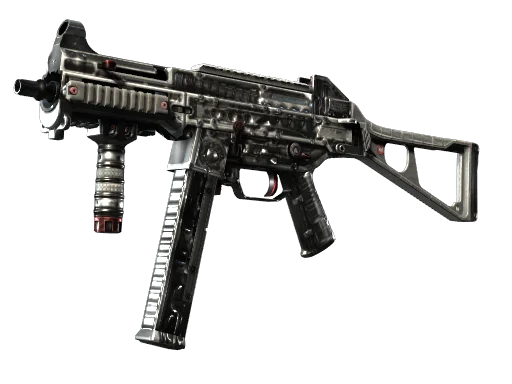
UMP-45 | Motorized

Industrial and mechanical. The UMP-45 looks like it was pulled from a factory floor. Fits the Kilowatt theme well.

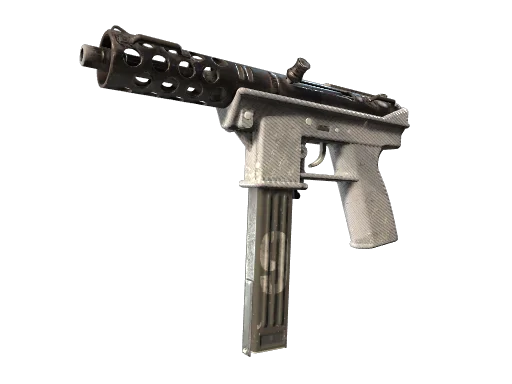
Tec-9 | Slag

Molten, volcanic textures that make the Tec-9 look genuinely dangerous. One of the more visually distinctive Mil-Spec skins in the case.

Kukri Knife Finishes in the Kilowatt Case

The Kukri Knife arrived with this case and hasn't appeared anywhere else. It's a curved blade — distinct silhouette, distinct inspect animation — that had no Counter-Strike precedent before 2024. Available in 13 finishes, including Fade, Crimson Web, Doppler, and Slaughter. The full range covers everything from approachable ($50 for Safari Mesh) to serious money ($900 for Crimson Web in good condition).

Wear condition matters a lot here. Factory New Kukri Knives carry a significant premium over Battle-Scarred, more so than with weapon skins. For a breakdown of why that gap exists, our guide on skin conditions explains how float value affects pricing in practice. If you're exploring the knife market more broadly, the best affordable knives under $350 and the complete CS2 knife patterns guide are good starting points.

How the Kilowatt Case Rental System Works

This is the feature that made the Kilowatt Case genuinely interesting on announcement day. When you open this case, you get two options: Open to Keep and Open to Rent.

  • Open to Keep — standard case opening, skin goes into your inventory permanently
  • Open to Rent — you get the unboxed skin for exactly one week, then it disappears

A few things worth knowing before you try it:

  • The rental still costs one Kilowatt Key and one Kilowatt Case — you're paying the same as a normal opening
  • Kukri Knives can't be rented, only the 17 weapon skins
  • Rented skins are non-tradeable and can't be listed on the Steam Community Market
  • This feature remains exclusive to the Kilowatt Case — no other case has adopted it since

The use case for renting is straightforward: you want to know if a $200 skin actually suits your playstyle before committing to buying one outright. Spend one key to try it for a week. If you love it, buy it on the market. If it felt wrong, you saved yourself a bad purchase. The rental has also contributed to the spike in case opening activity that followed the Kilowatt's release — more context on that in our look at CS2 case opening trends.

Is the Kilowatt Case Worth Opening?

Probably not for profit. Let's be direct about that.

A Kilowatt Key runs about $2.50. The case itself costs under $0.30. So each opening costs roughly $2.80. Most of what you'll unbox is a Mil-Spec skin worth less than a dollar. The expected value of any CS2 case opening is negative — that's not a bug, it's how Valve designed the system.

That said, there are a few scenarios where opening makes sense:

For fun and the experience: The Kilowatt Case lineup is genuinely good. If you enjoy the opening experience and aren't expecting profit, it's a reasonable entertainment spend at the $2.80 price point.

For trying skins via rental: If you're eyeing the AK-47 Inheritance or AWP Chrome Cannon and want to test them before buying, the rental system makes the Kilowatt Case uniquely useful. No other case gives you that option.

For long-term holding: Unopened cases tend to hold value better than their contents on average, especially for first-generation CS2 cases. If you're treating this as a collectible, holding the case might outperform opening it. That's speculative — but less speculative than hoping to unbox a Kukri Knife Fade.

If you're comparing this to the next CS2 case release, our complete guide to The Gallery Case covers how the two line up.

Methodology

Price points cited for the Kukri Knife and headline weapon skins (around $900 for a Crimson Web in good condition, the ~$2.80 per-opening cost) come from a snapshot of Steam Community Market median sales over the past 30 days, cross-checked against active Buff163 listings as of late April 2026. The expected-value math behind "most openings land you a Mil-Spec blue worth less than a dollar" weights Valve's published drop odds against current Steam Market median prices for each tier — it excludes private off-market sales, which don't reflect the liquidity a typical Kilowatt opener can realistically tap. Drop-rate percentages themselves are Valve-published mechanics, not derived.

Frequently Asked Questions About the Kilowatt Case

How Do I Get the Kilowatt Case in CS2?

The Kilowatt Case drops randomly at the end of competitive and casual matches. You can also buy it directly from the Steam Community Market, where it typically lists for well under a dollar. Since it's still in the active drop rotation, supply stays fairly high.

What Is the Most Expensive Skin in the Kilowatt Case?

For standard weapon skins, the AK-47 | Inheritance in Factory New condition tops the list. Among the rare special items, the Kukri Knife | Crimson Web is the most valuable at around $900 depending on float and pattern.

Can I Get a Kukri Knife From the Kilowatt Case Rental?

No. The rental option only applies to the 17 weapon skins. Kukri Knife drops are only available through the standard Open to Keep path.

How to Earn Money with CS2 Skins

2 lata temu

Counter-Strike 2 has quietly built one of the most active secondary markets in gaming, and yes, players genuinely earn money with CS2 skins every day. Not just Steam Wallet credit either, but cash withdrawn to bank accounts and PayPal. Before going any further, check your CS2 inventory value so you know what you're actually working with — plenty of players are sitting on hundreds of dollars without realising it. The methods below cover the full spectrum, from a same-day cashout for someone who just wants the money to longer-horizon strategies that build real returns.

Why CS2 skins have real cash value

Skins change the appearance of weapons, gloves, and knives. They don't make you aim better, they don't change hitboxes, they do nothing for your rank. And yet some sell for $50,000 or more. The reason is digital scarcity, aesthetics, and community status — the same social logic that makes someone spend $500 on a sneaker, except this "sneaker" can appreciate if you hold it long enough.

A few mechanics drive value, and the choice of platform matters more than most traders realise — we cover the trade-offs in our hub on where to buy and sell:

  • Rarity grade runs from Consumer (white) through Covert (red), with knives and gloves in their own Exceedingly Rare (gold) tier.
  • Wear is set by a float value between 0 and 1. Factory New (under 0.07) and Battle-Scarred (above 0.45) versions of the same skin can differ by 3–5x in price, and on float-sensitive finishes the gap is larger.
  • Pattern index controls the unique placement of art within a skin. A Case Hardened with the right blue pattern, or a Crimson Web at a perfect web seed, can multiply the base price several times.
  • Applied stickers can transform value. A Katowice 2014 holo on a popular skin can be worth more than the bare skin itself.
  • StatTrak typically adds a 10–30% premium, with bigger gaps on rarer items.

Supply also tightens over time. Every case opened consumes a key and produces a skin, but accounts go inactive, items get locked into long-term collections, and Valve eventually pulls cases out of active drop pools. The AK-47 Vulcan was a $20–30 skin in 2016 and now does not list below the low hundreds. That is not luck — it is supply contracting against a growing player base.

Quick path: cash out what you already own

If you just want money for the skins sitting in your inventory right now, the real choice is between three speeds.

  • Instant-sell bots (Skinflow, SkinCashier, Tradeit and similar) buy your skins on the spot. You accept a quoted price, send the trade, and receive payment within minutes. The trade-off is the haircut: typically 70–90% of market value. On a stack of $5 case drops, fine. On a $300 skin, that haircut is real money.
  • Peer-to-peer marketplaces (Skinport, CSFloat, DMarket, Buff163) list your skin and wait for a real buyer. Fees run roughly 2–12% depending on platform and item value, and you withdraw to PayPal, bank transfer, or crypto. Liquid skins move in hours; rare or oddly-conditioned items can sit for a week or more.
  • Steam Community Market is the safest and fastest for liquid items, but funds stay locked as Steam Wallet credit. If your goal is bank-account cash, Steam is a dead end.

For everything except the lowest-value clutter, peer-to-peer is usually the right answer. The fee gap pays for the wait.

Account prerequisites before you list anything

Sort these out once and you'll never think about them again:

  • Steam Guard Mobile Authenticator active for at least 15 days. Without it, every trade you accept is held by Valve for up to 15 days, and most third-party platforms simply will not work with your account.
  • Public Steam profile and inventory. Third-party platforms read your inventory directly to verify ownership and condition. A private profile blocks the entire flow.
  • Steam Trade URL copied from your Steam privacy settings.
  • Two-factor authentication on email, Steam, and any marketplace you sign up to.

Skip any of these and you will hit a wall mid-cashout.

Marketplaces compared: Steam, Skinport, CSFloat, DMarket, Buff163

Where you sell matters almost as much as what you sell. The fee structure on a $1,000 knife can mean walking away with $850 or $980. That is not a rounding difference.

How these fees were sourced. Figures reflect each platform's published seller fees and observed payout ratios as of early 2026. Headline rates change with promotions and item value, so always check the live fee schedule on the platform before listing.

A few notes the table doesn't capture. Steam imposes a per-listing price cap (around $1,800–$2,000 depending on region), which rules it out for high-end knives entirely. CSFloat tends to publish the lowest fees for high-value items and is the venue most serious sellers use for five-figure trades. Buff163 generally carries the lowest buy prices globally — useful both as a price reference and as an arbitrage source if you can navigate a Chinese-language interface. Skinport sits in the middle with a reputation for reliability that matters when you are clearing premium items.

One habit worth adopting before any sale: pull comparable listings on at least two platforms. A 10–20% spread between Steam and a third-party site is normal, and ignoring it is the most common way sellers leave money behind.

The trade-up contract path

Trade-up contracts are underused. Most players know they exist; far fewer run the math to find combinations that actually print money.

The mechanic: 10 skins of the same rarity grade in, one skin of the next tier out. The output comes from one of the collections represented in your inputs, weighted by how many of your inputs come from that collection. Seven Mil-Spec inputs from Collection A and three from Collection B gives you a 70% chance of a Restricted output from Collection A.

Float averages too. The output float is the weighted average of input floats, so high-float-but-cheap inputs can be used to nudge an output toward Minimal Wear or Field-Tested. On float-sensitive skins that single decision is worth tens or hundreds of dollars.

A profitable trade-up follows the same loop every time:

  1. Pick 10 candidate inputs at the same rarity tier.
  2. List every possible output and its current market price.
  3. Calculate the weighted probability of each outcome.
  4. Multiply each output price by its probability and sum to get expected value.
  5. Compare expected value against total input cost. Run the contract only if EV clears input cost by 15–20% — that buffer absorbs variance over many runs.

Tools like TradeUpSpy, FloatDB, and CSProfit handle the spreadsheet work and let you scan for positive-EV combinations across the whole collection database.

One caveat the math does not capture: profitable windows close. The classic Dragon Lore trade-up — once theoretically possible by sacrificing 10 M4A1-S Knights — has long since been arbitraged away because the inputs cost more than the output. Real opportunities today live in newer, less-scanned collections where the market hasn't fully priced in the EV. Those windows are narrower than they look in screenshots, but they exist.

Trading and flipping for profit

This is where it gets interesting, and where most players underestimate what they're getting into.

Successful skin trading is pattern recognition applied to a liquid market. You buy underpriced items, hold through a demand cycle, then sell into a premium. Or you flip pure spread: buy at the ask, list slightly below the next seller, capture the gap, repeat. One trader publicly documented turning €20 into €450 through systematic flipping — not luck, just disciplined execution on liquid skins with predictable margins.

What actually works:

  • Trade liquid skins. AK-47 Redlines, AWP Asiimovs, common knife finishes — these move fast at fair value. A 3–8% margin on a skin that sells in hours beats a 30% margin on something that sits for weeks tying up capital.
  • Trade during dips. When a skin drops 15% on a slow week, that is when you offer your item and pick up something temporarily undervalued. The correction usually comes within days.
  • Bundle. A buyer who wants a specific knife may not have the cash, but three mid-tier items at a slight discount can close the deal.
  • Cross-platform arbitrage. The same skin can be 10–15% cheaper on one market than another on any given day. Buff163 vs. Skinport vs. CSFloat is the classic triangle. Buy on the cheap side, list on the expensive side, manage the trade-lock timing.
  • Float flipping. This is the advanced version. Hunt marketplaces for skins with unusually low floats listed at generic prices — listed by sellers who do not know or do not care that float matters here. A Factory New AK-47 at 0.001 float can be worth several times the same skin at 0.06. Not every finish has that spread; learn which ones do before deploying real capital.
  • Sticker and pattern checks before every buy. A Case Hardened with a strong blue pattern, a Crimson Web with a high-coverage seed, or a Katowice 2014 holo on the right skin can multiply value. Buying without checking is leaving money on the table — or paying for "rare" that isn't.

The most consistent traders operate on pure rules. Set a threshold (for example, accept any offer that pays 10% above market) and stick to it. No emotion, no second-guessing, just process. The traders who blow up are the ones chasing a number that felt right in the moment.

Sticker crafts and high-end plays

Above a certain price point the market behaves differently, and a few advanced plays produce returns ordinary trading cannot.

Sticker crafts are the practice of applying expensive stickers to a clean base skin to create a one-of-one item. A four-Katowice-2014-holo AK-47 Redline Field-Tested is not the same item as a bare Redline FT — it is its own entry in the collector market. Crafts work when the base skin is well-chosen (popular finish, clean float, good pattern), the stickers are coherent as a set (all-Katowice, all-IBP, four-of-a-kind), and the placement is clean. Crafts fail when the base is forgettable or the stickers are mismatched. You can sell the resulting craft for substantially more than the sum of the parts, but the audience is small and the wait can be long.

Pattern hunting is the related play on items where a specific seed makes the difference. Blue Gem Case Hardenings, full-fade percentages on AWP Fades, Crimson Web seeds on Five-Sevens — these trade on collector demand that automated price tools do not track. For these items, community price-check threads on Reddit and dedicated Discord servers are more reliable than any algorithm. Expect to negotiate, and expect the right buyer to take weeks to surface.

Tournament sticker capsules as a separate hold play are covered below in the long-term section, since the time horizon is different.

Long-term investing

The slow path, but historically the most reliable one.

The logic: buy when supply is elevated and demand is moderate, hold until supply drops or demand spikes, sell. This pattern repeats predictably around case discontinuations, operation endings, and major Valve announcements.

Where the money has historically been made:

  • Operation-exclusive skins freeze in supply once Valve closes the operation. Prices typically climb meaningfully over the following year as the floor keeps rising and no new supply enters.
  • Discontinued and Contraband skins. The M4A4 Howl earned its Contraband status after a copyright dispute and is not coming back. The AWP Dragon Lore has appreciated for years. These are not going to flood the market.
  • Major tournament sticker capsules. Old Major capsules, especially from 2013–2016, have multiplied in value as supply shrinks. Current Major capsules carry more uncertainty but have a track record of working out over multi-year holds.
  • Blue-chip knives and gloves. Karambits, Butterflies, M9 Bayonets in clean conditions from discontinued collections. They drop during broad market pullbacks but recover in the same way high-quality collectibles in traditional markets do. For the upper end of this list, see the most expensive knives in CS2 and the inventories built around them in the most expensive CS2 inventories.
  • Discontinued cases. Cases removed from the active drop pool keep accruing value because their drop pool is fixed, and their price tracks the rarest items inside.

On the appreciation claims above. Specific 50–200% or 1,000% headline returns floating around in CS2 trading content reference items like the AK-47 Vulcan, AWP Dragon Lore, and certain operation skins, sourced from Steam Market price-history charts. They are illustrative of the pattern, not a forecast — the same supply-and-demand mechanics apply to new items, but past returns on individual skins are not a guarantee of future ones.

Holding top-tier skins for two or more years has historically outperformed short-term trading on the same capital. Capital requirements are higher and liquidity is lower, but the win rate is better.

Skin rentals as passive yield

A small but real corner of the market lets you earn returns without selling. Platforms like Lootbear allow you to lend skins to renters who put up a deposit equal to market value and pay a fee for the rental period. Your skin stays yours; you collect yield.

Realistic returns are around 3% per month on items that rent frequently — popular knives, gloves, and recognisable AK and AWP finishes. Lower-demand items sit idle, which drags actual yield below the headline number.

The risks worth knowing:

  • A skin with unusual float or expensive stickers carries value above the platform's quoted market price. If a renter walks away with the deposit, you have eaten the premium.
  • Rental platforms sometimes undervalue items, leaving you under-collateralised against your real cost basis.
  • Anything held with someone else introduces third-party platform risk.

Don't rent anything with sentimental value, anything with unpriced sticker premium, or anything the platform is clearly underpricing.

Scam avoidance and safe withdrawal

Scams are constant background noise in this market. None of what follows is paranoia — these are the patterns that hit traders every week, and almost all are avoidable.

Phishing sites. Fake Steam and marketplace login pages — usually one-character domain swaps — drain inventories within minutes of a successful login. Bookmark every site you actually use. Only access them through bookmarks. Never log in via a link from a DM, chat, or email.

API key hijacking. If a scammer gets your Steam Web API key, they can intercept trade offers and silently redirect items. Visit steamcommunity.com/dev/apikey and revoke any key you didn't personally create. If you find one you don't recognise, change your password, deauthorise all devices, and revoke the key — in that order, immediately.

Middleman scams. Anyone insisting on a "trusted middleman" for a direct trade is setting you up. Legitimate platforms handle escrow automatically. There is no scenario where a real buyer needs a human middleman.

Overpayment and chargeback. A buyer offers above market, pays via PayPal, and reverses the payment days later — after the skin is gone. Stick to the built-in payment systems on reputable platforms. Direct PayPal with strangers is not worth the risk no matter how friendly the conversation.

Fake trade offers. A trade arrives with item names that look right but quantities or specific items are subtly different. Slow down for 30 seconds before clicking accept. Verify item names, quantities, and that the offer comes from the platform's official bot account, not a random user. The 30-second pause has saved people thousands.

Red flags worth taking seriously:

  • Offers significantly above market (if it seems too good, it is)
  • Pressure to finish a trade right now
  • Requests to move the transaction off the platform
  • Login or trade links sent through Steam chat or Discord DMs
  • Claims about advance fees needed to release payment

The most dangerous CS2 trading scams walk through each of these in more depth.

Trade holds and withdrawal timing

Valve places a 7-day trade lock on every CS2 item received through a trade. During that window, the item cannot be traded again, although it can still be listed on the Steam Market.

For third-party marketplace sellers, this trade lock matters for cash-out timing. Items received via trade are not sellable through bot-based platforms for a full week. Items bought on the Steam Market also carry a 7-day cooldown before they can be traded out. Plan accordingly — and never buy something on Steam expecting to immediately move it to Buff or CSFloat.

Withdrawal from third-party platforms generally takes anywhere from minutes (crypto) to several business days (bank transfer). Watch the withdrawal-fee fine print: a platform advertising a 3% seller fee can claw it back on the cashout side, so calculate total cost end-to-end before assuming the headline number is the real number.

Tax considerations

If you sell CS2 skins regularly for real money, that income may be taxable, and tax authorities in the US, EU, UK, and most other developed jurisdictions are paying increasing attention to digital-asset transactions. Keep records of:

  • Sale amount and date
  • Original purchase price or acquisition cost for each skin
  • Platform fees paid
  • Withdrawal amount to your bank or PayPal

Once annual sales push into the hundreds of dollars, a short conversation with a local tax professional is worth the cost. Rules vary by country and most are still evolving. A surprise tax bill is the worst possible end to a profitable trading year.

When NOT to sell

Selling is the wrong move more often than people realise.

  • Right after a panic. When negative news hits — a rumoured trade-ban change, an exploit going public, a policy scare — sellers flood the market and prices crater. If you are not forced to sell, wait. Most panics resolve within a few weeks and prices recover close to baseline.
  • Right after a case release. New cases pull money out of existing skins as players cash out to fund openings. A 10–15% dip on established skins immediately after a major case drop is common. If you can wait two to four weeks, the market usually recovers.
  • The day you unbox something nice. Your instinct is to sell now before the price drops. Usually wrong. Take a day, check recent sale history, set a price target based on data not adrenaline.
  • When liquidity is the only thing you actually need. If a skin has been flat for six months and you have a better use for the capital, sell. But sell because the opportunity cost is real, not because you got bored.

The reverse case — selling into a Major or a viral pro-player moment — is when prices reliably tick up 10–30% on the relevant finishes. Track the schedule of CS2 Majors and large esports events; that calendar is the single best timing input most casual sellers ignore.

Realistic earnings expectations

Honest framing matters here, because expectations are where most beginners go wrong.

  • Cashing out a casual inventory. A typical mid-level player with a few years of drops, no major investment, and a Prime account might be sitting on $50–$300. Selling everything through a peer-to-peer marketplace, that translates to a real bank deposit of roughly the same amount minus 5–10% in fees.
  • Active flipping with a small bankroll. Starting from $100–$500 and trading consistently, a disciplined flipper can compound 5–15% per month for the first few months before market conditions and time per trade catch up. Most people who try this stop within three months because the work-to-payoff ratio is real and it is genuinely a job.
  • Long-term holds. Two-year holds on well-chosen blue-chip skins have historically returned in the high tens to low hundreds of percent, but with significant variance and locked capital. This is the path with the best risk-adjusted returns and the worst short-term liquidity.
  • Case opening as a strategy. The expected value on most cases is negative. Knife or glove drop probability is around 0.26%, which means roughly 385 cases per expected unusual drop, and the unusual drop you do get may be worth less than the keys you spent. If you enjoy opening cases, fine — treat it as entertainment, set a hard limit, do not call it earning money. The framework in the best CS2 cases to open in 2025 for maximum profit at least lets you compare cases by EV before clicking.
  • Weekly Care Package drops. Prime players earn a Care Package after the first weekly rank-up (5,000 XP). Pick the items with the highest market value, accumulate, hold the ones from collections that get discontinued, sell into demand spikes. Over a year these passive drops add up to a meaningful chunk of inventory value.
  • Skin giveaways. Verified streamers and community sites run real giveaways. The wins are rare but happen, and entering ones from creators you watch anyway costs nothing. Stay clear of "free skin" sites that demand a Steam login from a Twitch chat link — those are the phishing pipeline.

Frequently asked questions

Can you sell CS2 skins for real money?

Yes. The Steam Community Market only pays in Steam Wallet credit, which is not real money you can spend outside Steam. Third-party platforms like CSFloat, Skinport, DMarket, Buff163, and SkinBaron pay out via PayPal, bank transfer, or cryptocurrency.

What is the safest way to sell CS2 skins for real money?

Use established peer-to-peer marketplaces with built-in escrow and Steam OpenID login — CSFloat and Skinport are the most-cited names for premium items. Payment is held until the trade completes. Avoid direct trades with strangers and avoid any payment method where the buyer keeps chargeback power after sending.

How long does it take to sell CS2 skins?

It depends on method and item. Instant-sell bots pay in minutes at a discount. Liquid skins on peer-to-peer marketplaces typically move within 1–3 days. Rare or oddly-conditioned items can sit for weeks at full price. Valve's 7-day trade lock also affects timing on anything just received through a trade.

How much do you lose in fees when selling CS2 skins?

Fees range from roughly 2% on CSFloat for high-value items up to 15% on the Steam Market. Instant-sell services are the worst deal — they often pay 15–30% below market. Platform choice is the single biggest factor in your final payout.

Should I sell my CS2 skins now or wait?

Check the calendar. Prices tend to rise during Majors and after significant game updates, and tend to dip immediately after a new case release. If nothing major is on the schedule, current prices are likely close to baseline and there is no special edge in waiting.

Can I sell CS2 skins if my Steam inventory is private?

No. Your inventory must be public for any third-party platform to verify your items, and the Steam Market also requires a public profile. Privacy can be re-enabled after the sale completes.

What happens if I get scammed?

If the scam happened through a direct Steam trade, report it to Steam Support. Valve sometimes reverses trades from the past 7 days in confirmed account-compromise cases — but recovery is not the rule. If the scam happened on a third-party platform, contact that platform's support. Recovery rates are generally low across the board, which is why prevention is the only reliable strategy.


Mike has been trading CS2 skins since 2017 — see his author page for methodology. Once you have a feel for which strategy fits your situation, check your inventory value and pick the one method to focus on first. Build from there.

The Most Expensive Knives in CS2

2 lata temuThe Most Expensive Knives in CS2

Knives in Counter-Strike 2 occupy a strange space. They are melee weapons you will almost never use competitively, yet they are some of the most expensive digital items ever traded. Confirmed sales for the top specimens land in the tens of thousands of dollars; the single rarest blade has been the subject of declined offers above $1.5 million. The number sounds absurd until you look at how few of these items actually exist.

This guide ranks the most expensive and rarest CS2 knives, explains what actually drives those prices, and points out the traps in the listings that look too good to be true. Numbers come from Steam Market public listings (mid-2026), Buff163 sale prints over the past 12 months, and reported off-market deals where buyers and sellers chose to disclose. Where a number cannot be sourced honestly, the range is left wide on purpose.

How CS2 knife rarity actually works

Knife prices in CS2 are shaped by four factors: the knife model, the skin finish, the float value, and the pattern index. They do not contribute equally. Pattern index alone can be the difference between a $1,000 knife and a $1.5 million one on the exact same model and finish. Once you understand how the four interact — the same building blocks our end-to-end inventory pricing breakdown walks through — the price charts stop looking random.

If you want to check your CS2 inventory value before you start, the calculator gives you an instant breakdown of what your collection is worth at current market prices.

Knife model demand

The Butterfly Knife, Karambit, and M9 Bayonet dominate pricing because their animations, silhouettes, and community status are in a different tier from the rest of the roster. A Sapphire finish on a Butterfly costs significantly more than the identical finish on a Falchion or Gut Knife — not because the Doppler gem is different, but because the model itself commands a premium. The multiplier compounds: a rare finish on a desirable model is where five-figure and six-figure pricing lives.

Pattern index and seed

The pattern index (sometimes called pattern seed) is a number between 1 and 999 that controls how a skin's texture maps to the weapon model. For Case Hardened finishes, this creates extreme variation — some patterns produce near-full blue coverage, most are gold-heavy and unremarkable. The same logic applies to Crimson Web (web coverage and centering), Fade (gradient saturation), and Marble Fade (the placement of the red and blue triangles). A handful of patterns reach genuine grail status and trade for 10x or more the "average" pattern of the same knife.

For the full picture of which patterns matter and why, the complete CS2 knife patterns guide is the reference I keep open when I'm valuing a Case Hardened or Crimson Web listing.

Float value and condition

Float value runs from 0.00 to 1.00 and determines wear condition from Factory New to Battle-Scarred. For expensive knives the difference between a 0.01 float and a 0.06 float can be thousands of dollars. Collectors pay steep premiums for the lowest possible floats — especially on finishes where wear is visible on the blade or handle, or on knives from older cases where Factory New supply is essentially fixed. A Battle-Scarred Karambit Case Hardened with pattern #387 still clears five figures; the Factory New version of the same pattern is the most valuable knife in the game by a wide margin.

Supply scarcity

Many of the most expensive CS2 knives come from cases that are no longer in the active drop pool. New copies stop entering circulation. Existing supply shrinks over time — trade bans, lost accounts, collectors holding for years. That gradual compression of supply, especially on already-rare finishes like Sapphire, Ruby, Emerald, and Black Pearl, pushes prices upward in ways that are hard to reverse.

The base drop rate for any knife from a case is roughly 0.26%. For a specific grail pattern — a Blue Gem #387 or a perfectly centred Crimson Web — the odds compound to somewhere in the 1-in-1,000,000 range or worse. The math does justify a lot of the prices, even when the prices themselves look unhinged.

StatTrak and Souvenir multipliers

A StatTrak™ version of a high-end knife typically commands a 30%–80% premium over its non-StatTrak equivalent in the same condition, with the multiplier widening on grail patterns. There is no Souvenir version of any knife — Souvenir applies only to weapons unboxed at majors — so when a listing claims "Souvenir knife," walk away.

What is the most expensive CS2 knife ever?

The title belongs to the Karambit | Case Hardened (Factory New) with pattern index 387 — the Karambit Blue Gem. Pattern #387 produces near-100% blue coverage on the playside with almost zero gold or purple disruption. It is the cleanest blue pattern that exists on any Karambit, full stop.

Fewer than 50 authentic Blue Gem Karambits are believed to exist across all wear conditions, and exactly one of those is Factory New. The next-best float available is Field-Tested, which makes the FN — in collector terms — untouchable.

A Chinese collector known as "Noobrage" currently holds it. In September 2021, he reportedly rejected an offer of approximately $1.4 million. A later BTC offer at the equivalent of around $2 million is reported to have been declined as well; reports vary on the exact figure and we treat the $1.5 million-plus current valuation as a floor rather than a ceiling.

Confirmed sales of Blue Gem Karambits in lower wears have crossed $100,000. Even Minimal Wear and Field-Tested pattern #387 examples clear five figures with ease.

The rarest CS2 knives, ranked

The list below covers the items that come up consistently when collectors talk about top-tier knives. Prices reflect Factory New unless noted, and shift with float, pattern, and time of year. Where ranges are wide, that is because the spread between an "okay" and a "perfect" specimen of the same item really is that large.

1. Karambit | Case Hardened — Blue Gem (#387)

Range: roughly $100,000 to $1,500,000+ depending on wear.

The undisputed king. One Factory New example exists, with offers above $1.5 million reportedly declined. Lower wears still trade in the five and low six figures. No other knife has this combination of a defined "best pattern" and a market that has crossed seven figures privately.

2. Butterfly Knife | Doppler Sapphire

Range: around $15,500 to $26,000 in Factory New.

The Butterfly is the most popular knife model in CS2 — nothing else has that flip animation — and Sapphire is the rarest standard Doppler phase. Put the two together and you get five-figure pricing on every clean specimen that surfaces. Low-float Factory New examples with clean spines push past $20,000 and tend not to sit on the market for long.

For a phase-by-phase breakdown of every Doppler variant and what they actually look like in-game, the Doppler phases reference is the cleanest summary I know of.

3. Karambit | Doppler Sapphire

Range: around $15,000 to $22,000+ in Factory New.

A staple of high-end CS2 inventories. Deep blue finish, iconic Karambit animation, consistent demand from collectors who care about both rarity and presentation. Sub-0.01 float examples command premiums above the standard FN range. The Karambit Doppler Sapphire holds its value about as well as any knife in the market — model prestige plus finish scarcity is hard to beat.

4. Butterfly Knife | Gamma Doppler Emerald

Range: around $11,000 to $17,250 in Factory New.

Reported total supply across all wears sits around 553 copies — extreme scarcity by any measure. The vivid green is not universally loved, which is part of what keeps the buyer pool concentrated and the listings rare. Even Minimal Wear specimens have cleared $11,000. The Gamma Doppler reference goes through every phase pricing-wise.

5. Karambit | Doppler Ruby

Range: around $10,000 to $14,000+ in Factory New.

Sapphire's red counterpart — slightly more common, slightly cheaper, still extraordinary. The uniform red on the Karambit's curved blade is one of the most consistently demanded looks in the market. Ruby supply is thinner than standard Doppler phases but not as constrained as Sapphire, which is why it trades just below on most knife models.

6. M9 Bayonet | Case Hardened — Blue Gem patterns

Range: roughly $5,000 to $60,000+ depending on pattern and wear.

The M9 Blue Gems are the second-tier of the Case Hardened story. The flagship M9 patterns (#44, #555, #168 and a small number of others) produce heavy blue coverage and trade well into the five figures in Factory New. The very best M9 Blue Gem patterns have reportedly cleared $60,000 in private deals. The same caveat applies as with the Karambit: most Case Hardened M9 pulls are gold-heavy and unremarkable.

7. M9 Bayonet | Doppler Sapphire / Doppler Ruby

Range: around $6,000 to $10,000+ in Factory New.

The M9 Bayonet is the third pillar of the prestige-knife group, and its long blade actually showcases the Sapphire and Ruby finishes more cleanly than most other models. If you want a Sapphire or Ruby Doppler but cannot stretch to Butterfly or Karambit prices, this is where serious collectors look first.

8. Skeleton Knife | Crimson Web — StatTrak FN, max web

Range: around $10,000 to $26,200 in Factory New StatTrak with rare web placement.

This is a "stack the variables" piece. A Skeleton Knife in Factory New, StatTrak, with the web pattern covering as much of the blade as possible — the price ceiling for that specific configuration has cleared $26,000. Miss any one of the variables and the price drops fast, which is part of what makes Crimson Web pricing interesting: you can see exactly what you're buying, and listings get rated on visible web coverage with surprisingly little disagreement.

9. Butterfly Knife | Doppler Black Pearl

Range: around $6,000 to $12,000+ in Factory New.

Black Pearl is the rarest Gamma Doppler phase outside of Emerald, with a deep iridescent finish that shifts colour at different angles. Supply on a Butterfly is genuinely thin, and clean Factory New examples surface only occasionally.

10. Karambit | Gamma Doppler Emerald

Range: around $8,500 to $12,000 in Factory New.

The Karambit version of the same Emerald scarcity story. Slightly cheaper than the Butterfly equivalent because of model preference, but still priced firmly in five figures and rarely available. Coveted by high-tier traders who want the Emerald colourway without the Butterfly tax.

11. Butterfly Knife | Crimson Web — rare web, FN

Range: around $8,000 to $15,000+ in Factory New.

Each Crimson Web copy is unique because web placement varies by pattern. Centred webs with high coverage are extremely rare and command several thousand dollars over base FN pricing. The right pattern on a Crimson Web Butterfly is as collectable as a Doppler gem and usually cheaper to acquire.

12. Karambit | Lore — Factory New, high fade

Range: around $5,000 to $12,000 in Factory New.

The Lore finish features knot-like patterns with a mythological aesthetic, and it has a built-in fade dimension — pattern variation determines how much of the gold lore detail shows up cleanly across the blade. A Factory New Karambit Lore with a high "fade" pattern is a collector favourite among players who want something prestigious without going the Doppler route.

13. Bayonet (classic) | Doppler Sapphire / Doppler Ruby

Range: around $3,500 to $6,500 in Factory New.

The classic Bayonet is the elder statesman of CS2 knives. Its straight blade carries Sapphire and Ruby phases cleanly, and supply is constrained because the Bayonet predates most of the modern knife roster. A budget-conscious entry into gem Doppler ownership for collectors who do not need the Karambit or Butterfly silhouette.

14. Paracord Knife | Crimson Web — rare web, FN

Range: around $2,500 to $6,000 in Factory New.

The Paracord is one of the newer additions to the knife pool and the Crimson Web finish on it has built a following faster than expected. The wrapped-handle look photographs well, and high-coverage web patterns are chased by traders who want a piece of the Crimson Web story without paying Butterfly money.

15. Falchion Knife | Doppler Sapphire / Doppler Ruby

Range: around $2,800 to $5,500 in Factory New.

Falchion sits below the Bayonet in collector demand but the gem Doppler phases on it are still genuinely rare. A reasonable pickup for someone who wants a verifiably scarce finish without spending five figures.

If none of the above is in your budget, our budget guide to the best CS2 knives under $350 covers picks that still look great in-game without requiring a second mortgage.

Other expensive knives worth knowing

The Doppler gems and Case Hardened blue gems dominate the headlines, but a few other finishes consistently show up on serious collector wishlists:

  • Butterfly Knife | Lore. Inspired by the AWP Dragon Lore. Knot patterns with a mythological aesthetic. Factory New examples sit well into the thousands and the high-fade variant is a well-known wishlist item.
  • M9 Bayonet | Lore. The same Lore design on the M9's long blade. Factory New versions regularly exceed $2,000 and high-fade specimens push higher.
  • M9 Bayonet | Crimson Web (FN). The web pattern on the M9's straight blade is striking in its own way, different from the Butterfly version. Factory New Crimson Web M9 Bayonets are among the rarest non-Doppler knives available and can fetch $5,000 or more for clean web placement.
  • Butterfly Knife | Fade. A gradient design shifting from purple to gold, valued by "fade percentage." Full-fade examples with maximum colour saturation trade at significant premiums over base Fade.

Doppler phases at a glance

Doppler is where most of the high-end knife money lives, so a quick reference helps. Standard Doppler phases are Phase 1, Phase 2, Phase 3, Phase 4, plus the gem phases Ruby and Sapphire. Black Pearl is technically a Doppler phase too but commonly grouped with the gem phases for pricing purposes.

Gamma Doppler is a separate finish with its own phases — the gem phase here is Emerald, which is consistently the most expensive Gamma Doppler variant on every knife model.

A general pricing hierarchy across knife models, holding model and condition equal:

  • Sapphire > Ruby > Black Pearl on standard Doppler
  • Emerald > Phase 1/2/3/4 on Gamma Doppler
  • Doppler gems > Lore > Crimson Web > Fade on most prestige knives, though pattern matters enough on the last three that a perfect Crimson Web can outprice a mediocre gem

For full pricing per phase across each knife model, the Doppler phase guide and the Gamma Doppler guide are the references I'd send a friend before they spent serious money.

How to spot fake or scam listings

The high-end knife market attracts scammers because the items are illiquid and the price gaps are wide. A few patterns I see repeatedly:

  • "Souvenir knife" listings. No knife in CS2 has a Souvenir variant. If a listing says Souvenir, it is either mislabelled or a phishing attempt.
  • Pattern claims without an inspect link. Anyone claiming a Blue Gem, Fire & Ice Marble Fade, or max-coverage Crimson Web should be able to provide a Steam inspect link. If they refuse or the link does not load in-game, walk away.
  • Off-Steam transactions for first-time buyers. Six-figure deals do happen off-platform — they have to, because the Steam Market caps at $1,800. But the first time you transact at that level, use a known escrow service or a trusted middleman with a long reputation. Do not send crypto to a Discord username, ever.
  • Float value mismatches. Some sellers list a knife at "Factory New" pricing when the actual float is well into the Minimal Wear range. Always check the float in CSFloat or a similar tool before agreeing on a price.
  • Stickered "ultra-rare" patterns. Stickers obscure pattern detail. A Crimson Web with stickers covering the web placement is a red flag — either the seller does not understand what they have, or they are hiding a worse pattern than the screenshots suggest.

Where to buy and sell expensive knives safely

The Steam Community Market caps at $1,800 per item, which excludes most of this list. High-end transactions happen on third-party marketplaces or peer-to-peer with escrow.

The marketplaces I see consistently used by collectors at this price tier are Buff163 (the largest pool of high-end knives by listing volume), Skinport, and CS.Money. Each has its own trade-offs around fees, payout speed, and verification — the right choice depends on whether you are buying or selling and where the buyer pool sits.

For peer-to-peer trades above $5,000, work with a known middleman. The big public middlemen post their service rules openly; if you cannot find a middleman's history with a quick search, do not use them.

If you want to track what your existing collection is worth before you trade, check your CS2 inventory value for an instant breakdown at current market prices.

How knife prices actually move

A few patterns hold up across years of watching this market:

Off-market high-end sales drive the headline numbers. Six-figure knives never go through the Steam Market because they cannot. Deals at that level happen through escrow services, trusted middlemen, and sometimes direct crypto transactions. The Blue Gem Karambit trades that became public are almost certainly not the only ones; there are private sales at this level that simply never surface.

Streamer and community hype matter more than they should. A major unboxing or a viral story can spike prices inside 24 hours, and prices often do not fully retreat afterward. The community obsession compounds — a knife that "everyone is talking about" attracts buyers who would not otherwise have bid.

Supply only moves one way. Long-term collectors pull top-tier knives off the market and they do not come back. Each disappearance tightens the floor for the remaining listings. That dynamic is why the "is this a good investment" question is more nuanced than it looks: the supply argument is real, but the buyer pool is small enough that liquidity becomes the actual risk.

Frequently asked questions

What is the rarest knife in CS2?

The Karambit Case Hardened with pattern index 387 in Factory New condition. One confirmed FN example exists. The current valuation is upwards of $1.5 million based on declined offers; the actual ceiling is unknown because no one has paid the asking price.

Are expensive CS2 knives a good investment?

Top-end CS2 knives — rare Doppler gems, Blue Gem Case Hardened patterns, low-float StatTrak Crimson Webs — have generally appreciated over time as supply has tightened. That is not a guarantee. Real risks include Valve policy changes, liquidity challenges on very high-value items, and general market volatility around major game updates. Treat anything above $5,000 as speculative unless you genuinely want to own it for its own sake.

Why are Butterfly Knives more expensive than other models?

The flip animation. Nothing else in CS2 comes close to it visually, and it has been the benchmark for knife prestige since Counter-Strike: Global Offensive. Combine that model desirability with a rare finish like Sapphire or Emerald and you get the highest prices in the tradeable knife market.

What is a Blue Gem in CS2?

A Blue Gem is a Case Hardened skin where the pattern index produces near-total blue coverage across the blade — typically on a Karambit or M9 Bayonet. Pattern #387 is the Karambit benchmark with 90%+ blue coverage. Most Case Hardened pulls are gold-heavy and worth a fraction of a Blue Gem; the difference is purely pattern index, assigned at random when the knife is unboxed.

Where should I buy or sell expensive CS2 knives?

For listings under $1,800, the Steam Community Market is the safest option. Above that, third-party platforms (Buff163, Skinport, CS.Money) and peer-to-peer trades with a verified middleman are how these items actually change hands. Verify reputation, use escrow, and do not rush a deal — the seller pressuring you to "move fast" is the seller you should not trade with.


Mike has been trading CS2 knives since 2017 — see his author page for methodology.

Best Fire CS2 Skins: Build a Fiery Loadout

2 lata temuBest Fire CS2 Skins: Build a Fiery Loadout

A fire CS2 skins loadout is one of those themes that either looks completely deliberate or falls apart the moment you throw in one mismatched piece. Done right, it's striking — deep crimsons, scorching oranges, molten yellows bleeding together into something that reads as a real aesthetic decision rather than a random pile of expensive pixels.

In this guide I'm breaking down 10 fire-themed CS2 skins worth actually owning, spread across your knife, rifles, SMGs, pistols, and gloves. Not just a list of skins with "fire" in the name — some of those are ugly. These are the ones that actually hold together as a loadout.

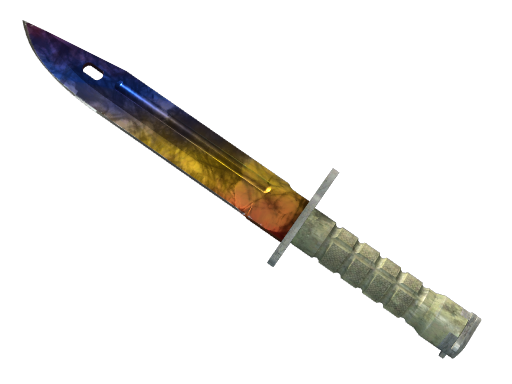
Bayonet Marble Fade

Let's start with the knife, because the knife anchors the whole loadout. The Bayonet Marble Fade blends red, yellow, and blue across the blade in a gradient that shifts depending on the pattern index — and that's exactly where things get interesting.

The pattern you want is a Fire and Ice or heavy red-tip variant. These emphasize crimson over blue and look legitimately like flame consuming steel. The blue-dominant patterns? Still beautiful, but they'll fight your fire theme rather than support it. Pattern indexes vary enough that two Bayonet Marble Fades can look completely different — if you're buying specifically for a fire loadout, check the CS2 knife patterns guide before spending money on whatever's cheapest.

Red-dominant variants carry a clear premium on the Steam Market. That premium is real and has been consistent for years.

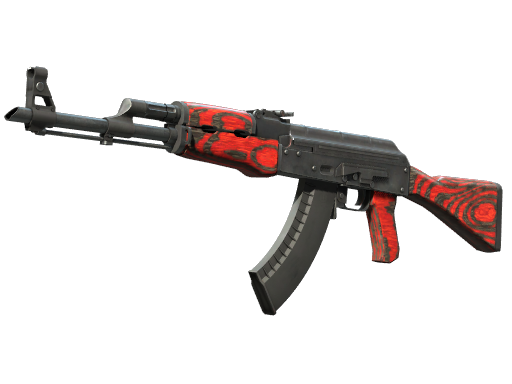
AK-47 Red Laminate

No literal flames, but the AK-47 Red Laminate has been a staple of red-themed inventories since CS:GO. The deep crimson panels over a dark base are understated compared to something like the Wildfire, which is exactly why it works — it doesn't compete with your flashier pieces, it anchors them.

Its real strength is sticker compatibility. Slap Incineration (Holo) or Firestarter (Holo) onto it and suddenly you've got a custom fire build that nobody else has configured the same way. Since the Red Laminate holds up across all wear conditions without looking washed out, it's also one of the better entry points for anyone building a themed inventory on a tight budget. Among the best AK-47 skins in CS2, it's not the most dramatic choice — but it might be the most flexible.

M4A1-S Chantico's Fire

This one rewards attention. The M4A1-S Chantico's Fire looks like a standard red skin at a glance, but those markings on the magazine and upper receiver are Aztec flame motifs — named for Chantico, the deity of fire and the hearth in Aztec mythology. That context makes it land differently than "skin with fire on it."

Covert rarity from the Gamma 2 Collection keeps supply limited and prices solid in Factory New. The float matters more than usual here — the Aztec detailing gets noticeably softer as wear increases, so if you're studying how skin condition affects value, this is a good case study. For CT-side rifle coverage in a fire loadout, it's the strongest option on the market.

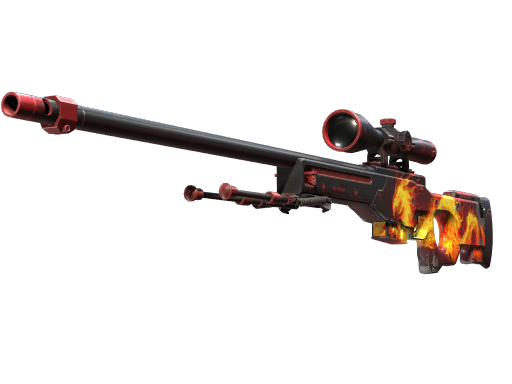
AWP Wildfire

The AWP Wildfire doesn't need much preamble. A fiery creature covers half the rifle body, surrounded by embers and mechanical detail work — mesh panels, rivets, a scope that graduates from dark gray into scorching red. It's one of those designs where someone clearly spent real time on the brief.

Released with the CS20 Case, it's appreciated steadily. I wouldn't buy it purely as an investment play, but if you need a fire AWP skin, this is the only one worth serious consideration. Everything else looks like a lesser attempt at what the Wildfire already did. It consistently shows up on collector wishlist pieces for a reason.

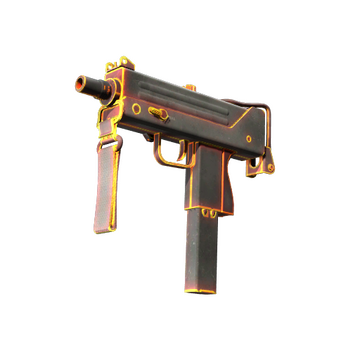
MAC-10 Heat

Hot metal is a different kind of fire aesthetic — and the MAC-10 Heat does it better than anything else in the game. The edges glow molten orange-red while the body stays a cooler metallic gray. It actually looks like freshly worked steel, not a cartoon of fire.

Factory New is where this skin earns its reputation. That edge glow is vivid at low floats and gets progressively more muted as wear increases — which makes the price gap between FN and MW actually make sense here. As a budget addition, it's easy to recommend. If you're hunting affordable pieces that still look good, it pairs well with what's covered in our best-looking CS2 skins under $10 guide.

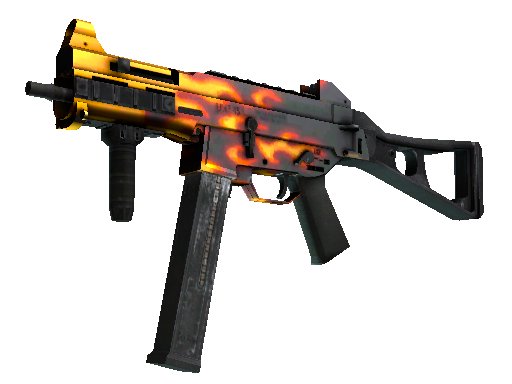
UMP-45 Blaze

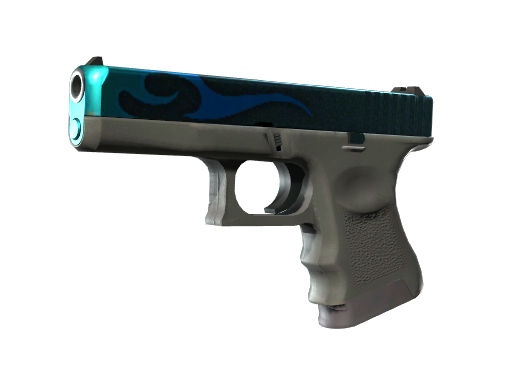
The UMP-45 Blaze uses the exact same flame pattern as the Desert Eagle Blaze — vivid orange and yellow fire over a dark base — but gets a fraction of the attention because it's not the Deagle. That asymmetry is interesting.

If you already own the Desert Eagle Blaze and want the matching SMG, this is a satisfying visual pairing at a much lower price point. If you're building on a budget and can't justify the Deagle yet, this gives you the same design language in a weapon you'll actually use during anti-eco and second-round buys. The UMP-45's kill reward economy makes early-round aggression viable, which gives the Blaze finish some actual screen time before you switch to a rifle.

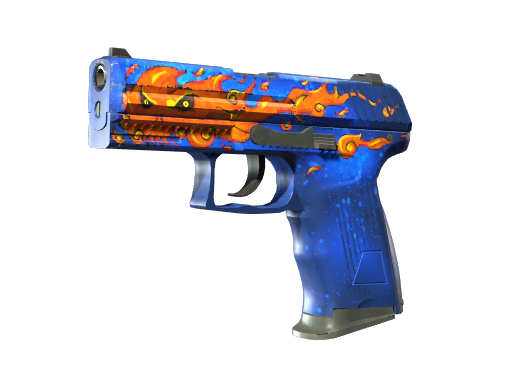
P2000 Fire Elemental

The P2000 Fire Elemental has been around long enough that it's easy to underestimate. An elemental creature wreathed in flames sits against a blue-gray background, and that contrast — warm fire against cool background — is what makes the orange actually read as hot rather than just orange.

CT-side pistol slots are awkward for fire loadouts because the options are genuinely limited. The Fire Elemental fills that gap without compromise. Covert rarity plus age means supply hasn't grown, which has kept prices from collapsing the way newer covert skins sometimes do. There's a reason people keep coming back to it.

Glock-18 Bunsen Burner

Remember Bunsen burners from school chemistry? Blue flame, roughly 1,500 degrees, reliably burning through whatever you pointed it at. The Glock-18 Bunsen Burner channels that same energy — a blue-flame gradient along the slide that reads as intensely hot rather than warm.

The cooler tone is actually useful. Your fire loadout probably has a lot of red and orange already; the Bunsen Burner brings a different temperature to the T-side starting pistol without breaking the theme. It's also among the most affordable skins on this list, available across all wear conditions, and you'll see it every single pistol round — so the value per game-minute is hard to beat.

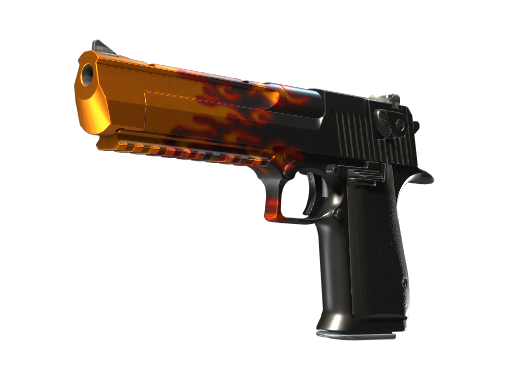
Desert Eagle Blaze

The Desert Eagle Blaze is in a different category than everything else on this list. Chrome base, vivid orange and yellow flames, contraband-adjacent market behavior — it's been appreciating for years and the supply doesn't grow. There's no case dropping new copies.

Factory New specimens with clean flame patterns on the slide can clear $1,000. That's not a flex, that's context: this is the grail piece of fire-themed CS2 collecting. If you're building a loadout around this skin, the rest of your choices should support it rather than compete with it. If you can only commit serious money to one fire skin, this is the answer. It's one of the few skins that any serious CS2 collector would recognize instantly across the lobby.

Specialist Gloves Crimson Kimono

No gloves are literally on fire, but the Specialist Gloves Crimson Kimono come closer than anything else. Deep red Japanese fabric with detailed embroidery patterns — under CS2's lighting, the crimson reads almost luminous. They're visible every second you hold a weapon, which makes them count more than most people realize when thinking about loadout coherence.

The pattern index matters here just like it does with the Bayonet Marble Fade. Red-heavy variants with minimal black patches carry a premium and look substantially better in a fire loadout context. It's among the most sought-after CS2 gloves for a reason — and if you're already spending on the Deagle Blaze, skimping on gloves shows.


Putting the Loadout Together

Building a coherent fire-themed inventory takes more patience than money, though both help. A few things I've found actually matter:

  • Knife and gloves first. They're visible across every weapon and they're the hardest to replace cheaply once prices move. Lock those in early.
  • Float consistency pays off. A mixed bag of Factory New and Well-Worn skins reads as unintentional. Minimal Wear across the board is a reasonable middle ground — cleaner than FT/WW, cheaper than FN.
  • Stickers are underrated. Fire-related stickers — Incineration, Firestarter, Phoenix (Foil) — can turn an already-themed skin into something unique to your inventory. The Red Laminate is the best canvas for this.
  • Market timing matters for the expensive pieces. The Deagle Blaze and AWP Wildfire have dipped after major CS2 updates before. If you're tracking value, use a tool like our CS2 inventory tracker to know when prices shift before committing.

For more loadout ideas, the CS2 skin showcase guide covers how to build a themed inventory that actually looks intentional rather than accumulated.

Methodology: Pricing references throughout this guide come from a 30-day rolling sample of Steam Community Market sold listings, cross-checked against active Buff163 and Skinport listings as of late April 2026. Pattern-driven premiums (Marble Fade Fire and Ice, Crimson Kimono red coverage) are gathered from public CSFloat listings plus reported sales from r/csgomarketforum. Where supply for a specific wear is too thin for a meaningful Steam median, we lean on the most recent reported third-party sale and flag it as such inline. Numbers move; treat them as a snapshot, not a quote.

Frequently Asked Questions

What is the most expensive fire skin in CS2?

The Desert Eagle Blaze in Factory New is typically the ceiling — well above $1,000 for clean copies. That said, a Bayonet Marble Fade with a strong Fire and Ice pattern index or high-float Specialist Gloves Crimson Kimono with minimal black patches can push past that depending on the specific specimen.

Are fire skins a good investment?

Some of them, yes. The Deagle Blaze, AWP Wildfire, and P2000 Fire Elemental all draw from older collections with fixed supply — that structural constraint tends to push prices up over time as the overall CS2 player base grows. But "tends to" isn't a guarantee. Research current market trends before buying anything primarily to hold it.

Can I build a fire CS2 loadout on a budget?

Yes. The MAC-10 Heat, Glock-18 Bunsen Burner, and UMP-45 Blaze are all accessible. Add an AK-47 Red Laminate with some fire stickers and you have a recognizable flame loadout without spending hundreds. The loadout doesn't need to be complete on day one — start with the affordable pieces, play with them, and fill in the expensive slots when the opportunity is right.

CS2 Skin Conditions Explained: All 5 Wear Levels

2 lata temu

Every CS2 skin has a condition — a wear rating that determines how pristine or beat-up it looks on your weapon. And if you've ever been surprised that two copies of the same skin look noticeably different, that's why. CS2 skin conditions aren't just cosmetic labels; they directly affect price, and understanding them can save you real money when shopping on the Steam Market or third-party platforms.

There are five tiers: Factory New, Minimal Wear, Field Tested, Well Worn, and Battle Scarred. Each one maps to a range of float values — a decimal number between 0 and 1 that the game assigns the moment a skin is created. That float is permanent. You cannot grind it down, polish it up, or trade it away. It's baked in forever, which is part of what makes CS2 skins work as digital collectibles, and it's one of the first variables we cover in this reference on how prices form.

What Is Float Value in CS2?

The float value is the underlying number that determines which condition tier a skin falls into — and where it sits within that tier. Closer to 0 means cleaner. Closer to 1 means heavily worn.

You won't see the float value anywhere in-game, but you can check your CS2 skin rarity and value using third-party tools that pull data from the Steam API. If you want to go deeper on how float values translate to actual pricing differences, our guide on how CS2 skin float values really work covers the mechanics in detail, including some genuinely counterintuitive pricing patterns.

Here's the full breakdown:

Factory New (FN) -- Float 0.00 to 0.07

Float values from 0 to 0.07. The cleanest tier, and the most expensive — sometimes by a wide margin.

Factory New skins look essentially untouched. Barely a scratch. For popular skins like the AWP Dragon Lore or AK-47 Fire Serpent, the price gap between FN and the next tier down can be hundreds or thousands of dollars. That gap isn't always rational, but it's consistent — collectors are willing to pay a serious premium for visual perfection. Ultra-low floats (think 0.001 or 0.002) push even further into collector territory, with prices that make the already-expensive standard FN look affordable.

That said, the condition tier alone doesn't tell the whole story. A 0.069 float FN of the same skin will often cost noticeably less than a 0.002 float FN — same condition label, different price entirely. For a detailed look at how this plays out across the market, check out the float vs price correlation analysis.

Minimal Wear (MW) -- Float 0.07 to 0.15

Float values from 0.07 to 0.15. This is where I'd point most buyers who want quality without the FN premium.

MW skins still look clean. Some minor scratches — you'll notice them up close, but in a fast-paced match you won't. The interesting thing about this tier is the internal variance: a 0.071 float MW is visually almost identical to a Factory New, while a 0.149 float looks noticeably more worn. Traders sometimes call very low MW skins "FN-look" for exactly this reason, and they often trade closer to FN prices.

If you find a 0.08 float MW on the market priced like a regular MW, that's worth a second look.

Field Tested (FT) -- Float 0.15 to 0.38

The widest float range of any tier — nearly a quarter of the entire 0-to-1 scale — which means Field Tested covers a lot of visual ground. A 0.16 float FT is barely distinguishable from low-end Minimal Wear. A 0.37 float FT looks like someone dragged the weapon across a gravel road.

That range is actually what makes FT interesting. Budget-conscious players often find serious value in low-float FTs: you get most of the visual quality of MW at 50-90% of the price, depending on the skin. It's also the most common condition you'll encounter on the Steam Market — supply is high, which keeps prices competitive.

Some players genuinely prefer the worn look. If you're not chasing a pristine collection and just want a skin that looks good in-game, Field Tested is worth considering on its own terms, not just as a compromise.

Well Worn (WW) -- Float 0.38 to 0.45

Float values from 0.38 to 0.45. Honestly, this is the condition tier I think about the least.

Well Worn has the narrowest float range of all five tiers — only 0.07 wide. There's less visual variation within the tier than you'd see in FT or BS, and the price difference compared to Field Tested is usually smaller than you'd expect for how much worse the skins look. In most cases, if you're shopping between WW and FT, the FT is the better buy unless the price gap is substantial. The fading and blemishes on WW skins are hard to ignore on lighter-colored or detailed designs.

There are exceptions — some patterns in WW actually look distinctive in a way that FT doesn't capture. But those are edge cases.

Battle Scarred (BS) -- Float 0.45 to 1.00

Heavy damage, deep scratches, chipped paint, large blemishes covering significant parts of the weapon. Battle Scarred skins aren't subtle about their wear.

The float range here spans over half the entire scale (0.45 to 1.00), so there's enormous visual variation within the tier. A 0.46 float BS looks like a roughed-up working tool. A 0.98 float looks like it survived a demolition derby. Some collectors specifically hunt for very high-float Battle Scarred skins — certain designs develop unique heavy weathering effects at extreme float values that have their own collector following, sometimes called "blackiimov" or "battle-worn" aesthetics.

For players who want iconic skins at accessible prices, BS is the obvious entry point. If you're just starting out or working with a tight budget, it's a reasonable way to build an affordable CS2 inventory without sacrificing the skins you actually want.

Do CS2 Skins Degrade Over Time?

No. The float value is locked the moment a skin is created — whether through a case opening, a trade-up contract, or a drop. Playing ten thousand hours with a Factory New AK doesn't add a single scratch. Storing a skin for years doesn't change anything either.

This is a fundamental property of how the system works, and it's part of what gives CS2 skins real staying power as collectibles. A Factory New skin from 2015 is still Factory New today.

How Does Skin Condition Affect Price?

Condition is one of the biggest pricing variables in the CS2 market. The general pattern is simple: lower float, higher price. But the magnitude of that effect varies enormously by skin.

  • For high-demand skins — AWP Dragon Lore, AK-47 Fire Serpent, M4A4 Howl — the gap between FN and FT can be hundreds or thousands of dollars. The premium for visual perfection is real and steep.
  • Budget skins may show only cents difference between conditions. The market just doesn't care that much.
  • Within a single condition tier, float still matters. A 0.001 FN and a 0.069 FN carry the same condition label, but the lower float will typically command a meaningful premium from collectors who care about raw float values.

Understanding those pricing dynamics is what separates informed buyers from overpayers. If you want a systematic way to evaluate purchases, our guide on what really matters in CS2 skins: float value, stickers, and patterns covers the full picture.

Which Skin Condition Should You Buy?

It depends on what you're actually trying to accomplish.

For showcase collections: Factory New or low-float Minimal Wear. The visual difference matters, and so does the resale value floor.

For everyday play: Low-float Field Tested or Minimal Wear. You get most of the visual quality without the FN tax. This is where I'd put most players.

For budget builds: Field Tested or Battle Scarred. You can assemble a full loadout of recognizable skins at a fraction of the cost of comparable FN versions.

For trading and investment: Condition alone isn't enough to go on — you also need to understand demand, liquidity, and market timing. The best metrics to monitor before buying a CS2 skin will give you a more complete framework.

If you're new to all of this, the beginner's guide to the CS2 skin market is worth reading before you start spending. And once you have a collection, you can always check your CS2 inventory value to see where things stand.

How to Avoid CS2 Scams: Most Dangerous Scams Explained

2 lata temu

CS2 scams have gotten significantly worse over the past two years, and the reason is simple: skin inventories are now worth real money. We're talking hundreds or thousands of dollars sitting in Steam accounts that most players secure with a password they probably reuse on other sites. Scammers know this. They've built entire operations around phishing links, stolen API keys, fake trade offers, and hijacked livestreams — all targeting CS2 players specifically.

This guide covers every major scam type you'll encounter, how each one works mechanically, and the concrete steps that will actually keep your account safe.

Why CS2 Scams Keep Getting Worse

When Valve introduced weapon skins and player-driven trading, they accidentally created one of the most liquid virtual goods markets in gaming history. That's great for players who want to trade and invest — our marketplaces hub walks through every legitimate platform — but it's also great for criminals.

The financial incentive is obvious. A single CS2 inventory can be worth more than a month's rent in many countries. Scammers who successfully steal and liquidate those skins face almost zero legal consequences — cross-border jurisdiction issues, anonymous crypto payments, and Steam's limited recovery options all work in their favor.

So they keep getting better at it. The phishing sites look more convincing every year. The API scam is now fully automated. Streamjacking operations run at scale, pulling in thousands of simultaneous viewers. Even if your CS2 inventory is modest, your Steam account itself has resale value — hijacked accounts get used for fraud, sold in bulk, or stripped of whatever's inside.

If you want to know what your current inventory is actually worth, check your CS2 inventory value before you keep reading. Understanding what you're protecting matters.

For a focused breakdown of the newest schemes specifically, the top 10 CS2 trading scams to watch for in 2025 has additional detail on variants that emerged more recently.

Most Dangerous CS2 Scam Types

Every CS2 player should be able to recognize these on sight. Knowing what you're looking at before you click anything is the only real defense.

Phishing Scams

Phishing is responsible for the majority of stolen CS2 accounts. The mechanics are simple, which is why it keeps working: you get a link, you click it, you enter your Steam login on a fake page, and someone now has your credentials.

One rule kills most phishing attempts: never click links from people you don't know.

That sounds obvious. It's also surprisingly easy to ignore when someone sends you what looks like a normal Steam message. Scammers are good at creating pretext — a reason that feels urgent enough to make you act before you think.

Common pretexts:

  • "Vote for my team" — fake tournament page, harvests Steam login on the voting screen
  • "You won a giveaway" — prize claim page requiring Steam authentication
  • "Check out this trade offer on [site name]" — cloned version of a legitimate marketplace with an almost-identical URL
  • "Human verification required" — fake Cloudflare challenge that asks you to paste something into your Windows Run dialog (this one installs malware)

The last one is nastier than the others. You're not just handing over credentials — you're running arbitrary code. A friend of mine fell for this variant last year, lost a $400 knife within 20 minutes of pasting that "verification code."

Block and report anyone who sends you links like these. Learning to spot fake CS2 skins and scam attempts will sharpen your pattern recognition further.

Impersonation Scams

The scammer pretends to be someone you'd trust — a Steam employee, a known trader, a pro player — and constructs a scenario that requires you to either hand over items or confirm a trade.

These aren't low-effort. Good impersonators will level up a fake Steam account over weeks, copy a real trader's profile picture and display name down to the accent marks, and have a plausible backstory ready. Some use a fake middleman — actually their accomplice — to handle supposed "secure" trades. The middleman exists to create an illusion of neutral third-party verification.

A few things that are always true:

  • Steam employees will never contact you via Steam chat. Ever. If someone claiming to be Valve asks for your login details or wants to hold items, they're lying.
  • Display names are not identity. Anyone can copy a name. Check the profile URL directly.
  • Verify through multiple channels. If someone claims to be a known trader, find their actual verified social media before agreeing to anything.

If you encounter someone impersonating a Steam rep or community figure, report the profile immediately.

Trade Scams

Valve's security improvements have made raw item-switch scams harder to pull off, but they haven't disappeared. And the more sophisticated variants are still catching people regularly.

The classic version: scammer shows you a valuable item, you agree to the trade, they replace it with a cheaper look-alike at the last second before you hit confirm. Works on players who don't carefully inspect every item in the window.

The evolved versions are subtler:

  • Fake game items — Items from obscure non-Valve games designed to look like CS2 skins. The tell is the game title in the item description. If it doesn't say "Counter-Strike 2," the item is worthless regardless of how it looks.
  • Overpay bait — Someone offers you an item that seems far above market value for your skin. Their item either has no liquidity, is a known market manipulation target, or simply can't be sold anywhere useful. Understanding why some expensive CS2 skins never sell makes this scam much easier to spot.
  • Condition swap — The scammer lists a Factory New skin, then swaps it for a Battle-Scarred version before you confirm. The names are identical; the float values are not.

Verify the exact item in the trade window — float value, applied stickers, condition, game title. A small decoy item on your side of the trade (like a $0.01 sticker) can help you confirm whether a mobile confirmation is for the right trade or a fake one.

API Scams

This is the one that most players don't know about until it happens to them. And it's terrifying because it operates completely silently.

Here's the full attack chain:

  1. You land on a fake third-party trading site — usually via phishing — and "log in with Steam"
  2. The site grabs your Steam API key behind the scenes without displaying it to you
  3. You leave the site, thinking nothing happened
  4. Later, you initiate a legitimate trade with a real person
  5. The scammer's bot — running 24/7, watching your account — cancels your real trade automatically using your stolen key
  6. Seconds later, it sends you a duplicate trade offer from an account impersonating the person you were trading with: same username, same avatar, same items listed
  7. You see what looks like your expected trade, confirm it on mobile, and your skins go to the scammer

Steam Guard doesn't stop this. Two-factor authentication doesn't stop this. The attacker is working inside your authenticated session using a valid API key.

How to check:

Visit steamcommunity.com/dev/apikey right now. If there's a key listed that you didn't personally create, your account has been compromised. Revoke it immediately, change your password, and generate a new trade URL.

Make a habit of checking this page monthly. More detail on protecting your account is in our guide on protecting your CS2 inventory from hackers.

Streamjacking Scams

Streamjacking exploded in scale around 2023 and hasn't slowed down. The operation looks like this: scammers compromise YouTube channels with real subscriber counts — sometimes hundreds of thousands — strip the original content, and rebrand the channel as a pro CS2 player. s1mple, NiKo, donk, and other high-profile names get impersonated constantly.

The fake stream goes live timed to coincide with a major tournament. It displays QR codes and links promising free skins, free cases, or crypto giveaways. Some of these streams have maintained 10,000+ concurrent viewers before YouTube takes them down — which can take hours.

What victims are asked to do:

  • Log in with Steam to "claim" free skins — you're handing over your account
  • Send cryptocurrency to receive double back — the crypto never comes back, obviously
  • Scan a QR code that grants access to your Steam Guard authenticator

The tell: check the channel's creation date and video history. A channel supposedly belonging to a famous CS2 player that was created two weeks ago and has zero previous videos is not that player's channel. Also: no legitimate CS2 giveaway requires you to send money first. That's not how giveaways work. That's how theft works.

Discord and Telegram Scams

The platforms change; the playbook doesn't. Scammers have flooded Discord servers and Telegram groups with bots that blast out messages to everyone they can reach. The messages usually claim you've won something, been selected for a partnership, or found a limited-time deal.

Patterns I see most often:

  • Bot DMs claiming you won on a CS2 gambling site you've never used
  • "Partnership offers" from accounts impersonating real trading platforms
  • Time-limited skin deals with links that look almost identical to legitimate site URLs
  • Fake tournament invitations where the "registration form" steals your credentials

Never click links in unsolicited DMs. Even if the message appears to come from a server you trust or an admin you recognize — accounts get compromised, bots get added to servers with legitimate reputations. Type URLs manually if you need to visit a site.

How to Protect Your Steam Account and CS2 Skins

Recognizing individual scams is necessary but not sufficient. These are the security habits that actually hold up.

Enable Steam Guard Mobile Authenticator

If you don't have Steam Guard enabled, do it now. It adds two-factor authentication — every login from an unrecognized device requires a code from your phone. This blocks the vast majority of unauthorized access attempts that rely on stolen passwords alone.

It also introduces a trade hold period for trades made without mobile confirmation, which gives you a window to catch something suspicious before it's too late.

Check Your API Key Regularly

Once a month minimum. Immediately after using any third-party site you haven't used before. The URL is steamcommunity.com/dev/apikey. If a key exists that you didn't create, revoke it, change your password, and generate a new trade URL. This takes about three minutes and has saved more than a few inventories.

Use Trusted Marketplaces Only

Stick to established platforms. And here's something people get wrong: don't find these platforms through search engine results. Scammers buy Google Ads that appear above legitimate sites, using nearly identical URLs. Bookmark trusted platforms and navigate there directly.

Our ranking of the best CS2 marketplaces covers the options worth using. For the full process of buying and selling safely, how to safely buy and sell CS2 skins online goes deeper on the actual workflow.

Verify Every Trade Carefully

Before confirming anything on your mobile authenticator, check:

  • The exact item name and skin condition (Factory New vs. Battle-Scarred, for example)
  • The float value and any applied stickers
  • The trader's profile — does it actually match who you intended to trade with?
  • The game title under each item — must say "Counter-Strike 2"

This takes 30 seconds. Skipping it is how people lose $500 skins.

Keep Your Credentials Private

No legitimate service needs your password, your Steam Guard code, or your active session. If anyone — a person, a bot, a "Valve employee" — asks for any of these, you're being scammed.

Steps to Take If Your Account Has Been Compromised

Speed matters here. Every minute a scammer has access to your inventory is another item that might be gone.

  1. Scan your computer for malware and remove any detected threats before changing anything — otherwise you're handing your new password to the same attacker
  2. Change your Steam password and the password of your linked email address
  3. Revoke any unauthorized API keys at steamcommunity.com/dev/apikey
  4. Deauthorize all other devices from your Steam account settings
  5. Generate a new trade URL to invalidate any pending malicious trade links
  6. Contact Steam support — you'll need proof of ownership, so have purchase history and account details ready
  7. Lock your Steam account temporarily if items are actively being moved

Getting your items back is hard and not guaranteed, but the process is covered in detail in our guide on how to recover your CS2 skins after getting scammed.

Frequently Asked Questions About CS2 Scams

What is the most common CS2 scam?

Phishing, by a wide margin. It's the gateway to most other attacks — once scammers have your login credentials or API key, they can execute more sophisticated schemes. The initial hook is almost always a link sent through Steam chat, Discord, or Telegram leading to a fake page designed to capture your credentials.

Can Steam Guard protect me from all scams?

No, and this is important to understand. Steam Guard significantly improves your account security, but API scams bypass it entirely by operating within your authenticated session. Some phishing attacks are also sophisticated enough to capture your two-factor codes in real time by proxying your login through their server. Steam Guard is essential — just not sufficient on its own.

How do I know if my Steam API key has been stolen?

Visit steamcommunity.com/dev/apikey. If there's a key listed that you didn't create, your account has been compromised. Revoke it, change your password, generate a new trade URL. Do this now if you haven't checked recently.

Are third-party CS2 trading sites safe?

Some are, and some aren't — and the difference isn't always obvious. Established platforms with strong reputations and verified trade bots are generally fine. The risks are: fake sites that look like real ones (navigate by URL, not search), and real sites that get compromised or implement sketchy practices over time. If you're new to trading, the beginner's guide to CS2 skin trading covers how to evaluate platforms before trusting them with your account.

Final Thoughts

The rule hasn't changed: if it seems too good to be true, someone is trying to steal from you.

Free skins for logging in, double your crypto, exclusive deals that expire in ten minutes — none of it is real. Scammers rely on urgency, greed, and the brief moment before you engage your skepticism. That gap is what they're exploiting.

The actual defense is boring: Steam Guard enabled, API key checked regularly, trades verified carefully, links ignored unless you initiated the contact. These habits protect you against nearly every scam in circulation, including the ones that haven't been invented yet — because they all rely on the same thing, getting you to act before you think.

CS2 Doppler Phases Guide: All Knife Phases Explained

2 lata temu

If you've spent any time looking at CS2 knife skins, you've run into Doppler phases. They're among the most recognized finishes in the game — seven distinct variants ranging from the relatively accessible to prices that require a small loan. The CS2 Doppler phases system isn't just about aesthetics either: pattern index, float value, and knife model all feed into pricing in ways that catch first-time buyers off guard. This guide breaks down every phase, what drives the price differences, and which options actually make sense depending on what you're after.

What Are the Doppler Phases in CS2?

A Doppler phase is a color category within the Doppler knife finish, determined by the pattern index — also called the pattern seed. This number dictates how the skin's texture maps onto the blade. Change the pattern index and you can shift from a predominantly dark blade to an almost entirely pink one, all within the same "Doppler" finish.

The Doppler finish sits at Covert (Red) tier — already rare by default. Within that tier, you get four standard phases (Phase 1 through Phase 4) plus three special variants: Ruby, Sapphire, and Black Pearl. The special variants have a combined drop rate estimated under 1%, which is why their prices live in a different universe from the standard phases — phase identification connects directly to the broader valuation methodology used across all CS2 inventory checks.

One thing worth understanding early: Doppler skins only exist in Factory New (float 0.00–0.06) and Minimal Wear (0.06–0.08). That narrow float range still matters for pricing — a 0.001 float and a 0.059 float are both technically Factory New, but they don't look the same and they don't sell for the same price. If you want to understand exactly how that works, the breakdown in how CS2 skin float values really work is worth a read before you go shopping.

Doppler Phase 1

Phase 1 got a genuine glow-up when CS2 launched. In the old engine, Phase 1 blades leaned heavily dark — lots of black with subdued purple and blue. After the engine update, the colors came alive: brighter blue and pink spots, a touch of deeper purple, noticeably more visual depth than before.

The dominant palette remains black with blue and purple accents — not everyone's preference, which is why Phase 1 tends to sit at the lower end of the standard phase pricing. Among buyers who specifically want that darker, more aggressive look, though, it has a consistent following.

Prices depend a lot on the knife model. An M9 Bayonet Doppler Phase 1 runs just over a thousand dollars. Drop to a Gut Knife and you're looking at around $200 — which, for a Doppler, is practically a bargain.

Doppler Phase 2

This is the one everyone wants. Phase 2 was already popular before CS2's engine update, and nothing has changed since — it might actually be more in demand now with better lighting. The blade is almost entirely pink, often described as a "pink galaxy" pattern, and that bright, saturated look is exactly what drives consistent demand in the CS2 community.

Bright skins sell. That's the whole explanation for why Phase 2 commands a premium over every other standard phase. A Karambit Doppler Phase 2 crosses $2,000. An Ursus Knife Doppler Phase 2 can be found around $500 — a quarter of that, still a lot, but proportionate to the model's lower baseline price.

If you're buying a Doppler as a long-term hold, Phase 2 on a popular knife model is the safest standard-phase choice. Demand doesn't dry up.

Doppler Phase 3

Phase 3 is the one people talk about least, which is both a curse and an opportunity. The colors — blue, dark blue, black, with occasional green hints — are more muted than the other phases. If you want something understated, Phase 3 delivers. If you want a blade that pops, look elsewhere.

Being the least popular standard phase means it's also the cheapest. An M9 Bayonet Phase 3 is slightly above $1,000. Gut Knife and Falchion variants drop considerably lower. For someone who wants a real Doppler finish without stretching their budget, Phase 3 is the practical choice — just go in knowing the resale demand is softer.

Doppler Phase 4

Phase 4 is essentially a brighter version of Phase 3, minus most of the black. The surface goes vivid blue — and at certain pattern indexes, it gets close enough to Sapphire that the comparison is unavoidable.

Those high-saturation examples are nicknamed "max blue" Phase 4s, and they trade at a premium over typical Phase 4 pricing. Collectors who want something close to a Sapphire visually, but can't justify (or afford) a true Sapphire, often end up here. It's a genuine middle ground, not just a consolation prize.

Price range is wide. A Butterfly Knife Doppler Phase 4 can hit $3,000. A Bayonet or Ursus Knife version lands around $400–$500.

Doppler Sapphire

The blade is entirely blue. No other color mixed in, no dark patches, just solid clean sapphire blue from tip to handle. That's it — that's the whole product pitch, and it's enough to push prices well into five figures for the right knife model.

CS2's improved lighting made Sapphire look even better than it did in the old engine, which contributed to another price bump when the game launched. Karambit and Butterfly Knife versions easily cross $10,000. If you want Sapphire without the flagship price tag, an Ursus Knife Doppler Sapphire sits around $1,800, and Shadow Daggers Doppler Sapphire can be found under $500. Still not cheap, but at least you're not mortgaging anything.

For anyone tracking the most expensive knives in CS2, Sapphire is consistently near the top of that list.

Doppler Ruby

Same concept as Sapphire, different color: solid crimson red, no mixing, no variation. The comparison to an actual ruby gemstone isn't much of a stretch — it genuinely looks like one on the right knife animation.

Ruby trades slightly below Sapphire in most cases, though the gap narrows on popular models. A Butterfly Knife Doppler Ruby in Factory New can exceed $11,000. Lower-tier models are cheaper, but the premium over their Phase 1–4 equivalents is still substantial — you're paying for the solid color, not just the knife.

Doppler Black Pearl

The rarest of the seven. Black Pearl blades have a dark, swirling pattern of black and purple clouds — moody, a little threatening, genuinely unlike anything else in the Doppler family. The rarity isn't marketing; these things are hard to find.

Some Black Pearl knives sell for $20,000–$30,000, depending on the model and float. Finding one at a fair price often means watching multiple markets and moving quickly. They appear in the rarest skin patterns worth thousands of dollars lists for a reason.

Doppler Phase Price Ranking: Which Is Most Expensive?

Here's how the seven phases stack up by typical price range — keep in mind these numbers shift with the market, and knife model matters enormously:

The knife model multiplies everything. A Butterfly Knife or Karambit in any phase costs significantly more than the same phase on a Gut Knife or Falchion. That's just demand — certain models are more popular, full stop. Our CS2 knife patterns guide goes deeper on how model choice affects pricing across the board.

Which Cases Contain Doppler Knives?

You can unbox Doppler knives from these cases:

  • Chroma Case
  • Chroma 2 Case
  • Chroma 3 Case
  • Spectrum Case
  • Spectrum 2 Case
  • Prisma Case
  • Prisma 2 Case

Any of these can drop any of the seven Doppler phases when you hit the knife. The catch is that hitting a Covert knife in the first place is already a low-probability event — and landing Ruby, Sapphire, or Black Pearl on top of that is vanishingly rare. Opening cases for a specific special phase isn't really a strategy; it's a lottery ticket. If you want to think more systematically about which CS2 cases are worth opening, there's a full breakdown available.

How Does Float Value Affect Doppler Prices?

Since Doppler skins only span Factory New and Minimal Wear, the float range is compressed: 0.00 to 0.08. But "compressed" doesn't mean "irrelevant."

A Factory New Doppler at 0.001 looks noticeably cleaner and brighter than the same knife at 0.059. For standard phases, the price difference is real but not dramatic. For Sapphire and Ruby, an extremely low float can add hundreds — sometimes thousands — to the price. Collectors after pristine examples will pay that premium without hesitation.

The practical takeaway: if you're buying a standard phase Doppler, a float of 0.02–0.04 is usually fine and won't cost you significantly extra. If you're acquiring a Sapphire or Ruby, the float deserves more scrutiny. Understanding skin conditions and float values in detail helps you calibrate whether a given listing's premium is justified.

Which Doppler Phase Should You Buy?

Here's my actual take, not a diplomatically balanced list of considerations:

Phase 2 is the right call for most buyers who want a standard Doppler. It holds demand better than the other phases, looks great in-game, and the price premium over Phase 1 or Phase 3 is usually justified over a reasonable holding period.

Phase 4 "max blue" is worth hunting for if you want something close to Sapphire visually without committing four figures more. Be patient — the highest-saturation examples come up periodically and are worth waiting for.

Phase 3 makes sense if budget is the main constraint. You still get a real Doppler knife, just with softer resale demand. Pair it with a more affordable model like the Gut Knife and you can get into the Doppler family for under $300.

Sapphire and Ruby are prestige purchases. They hold value extremely well over time — extreme rarity tends to do that — but the entry cost is high and liquidity is lower than standard phases simply because the pool of buyers is smaller. If you're buying one as an investment, that trade-off matters.

Black Pearl is a statement piece. Full stop. It's the rarest option in the Doppler family, with pricing to match. For the best CS2 skins to invest in at the high end of the market, Black Pearl ranks alongside Sapphire and Ruby — but its illiquid market means it can sit for a while before the right buyer appears.

The knife model itself shapes the experience as much as the phase does. Karambit and Butterfly Knife animations are genuinely more satisfying to use, which is why they command premiums even within the same phase. If you're going to spend serious money on a Doppler, spend it on a model you actually enjoy looking at.

If blue tones are your thing and you want to explore a related finish, check the Gamma Doppler guide — it runs greener but has its own hierarchy of rare phases worth understanding. And if you want to see what your current collection is actually worth, you can check your CS2 inventory value for free.

Gamma Doppler CS2 Guide: All Phases & Prices

2 lata temuGamma Doppler CS2 Guide: All Phases & Prices

The Gamma Doppler is one of those knife finishes that splits CS2 collectors into two camps: people who love the green palette, and people who don't understand it yet. This guide covers every phase, current price ranges, and the factors that actually move value — useful both for Emerald hunters and for anyone trying to figure out why Phase 2 costs twice what Phase 1 does. Prices shift — treat the numbers here as a baseline, not gospel.

What Are Gamma Doppler Phases in CS2?

The Gamma Doppler finish combines green, black, and hints of cyan or lime, with each phase representing a different ratio of those colors. There are five phases total. Phases 1 through 4 sit at Restricted rarity, while the Emerald stands alone at Classified — which is both rarer and more expensive, and the Emerald premium is a textbook case of how supply scarcity feeds into the full CS2 inventory valuation guide.

The "green Doppler" label is accurate. If you're used to standard Doppler phases in CS2 — which run black, red, and blue — the Gamma palette feels like a completely different finish. Same phase mechanic, completely different visual territory.

Different Gamma Doppler phases in CS2

Don't confuse Gamma Dopplers with standard Dopplers. The standard version has Sapphire, Ruby, and Black Pearl as its special phases. The Gamma version has only the Emerald. They share the phase system but that's about it.

Which Knives Are Available in Gamma Doppler?

The Gamma Doppler comes from two cases: the Gamma Case and the Gamma 2 Case. That limits which knife types can carry this finish:

  • Bayonet
  • Bowie Knife
  • Butterfly Knife
  • Falchion Knife
  • Flip Knife
  • Gut Knife
  • Huntsman Knife
  • Karambit
  • M9 Bayonet
  • Shadow Daggers

The Glock-18 Gamma Doppler is the one oddity here — it's the only non-knife weapon with this finish. It wasn't part of the original Gamma Case drop pool and behaves the same as knife versions in terms of phase variation.

Gamma Doppler Phase 1

Phase 1 is dominated by black, with green and turquoise shading across the blade. On models like the Butterfly or Bowie, bright green shows on the handle and guard. The Glock treats this differently — only the slide and unlock button pick up that color. The rest stays black.

Phase 1 is the least flashy of the bunch, which is exactly why it's the most accessible entry point. Prices typically run from $180 to $3,000 depending on knife model and float.

Gamma Doppler Phase 2

Here's where it gets interesting. Phase 2 runs about 80% green, 20% black — the closest any Restricted phase comes to replicating the Emerald look. The green is vivid, the darker details on handles and guards add contrast without killing the visual, and at lower float values it genuinely looks spectacular.

Phase 2 is the most expensive of the four Restricted phases, and for good reason. Traders call it the "budget Emerald," and that framing sticks because it's accurate. Demand for clean, low-float Phase 2 knives stays consistently strong even when the broader market softens. Prices range from $200 to $4,200.

Gamma Doppler Phase 3

Phase 3 adds cyan or aqua to the color mix. No single color takes over — you get green, black, and blue sharing the blade roughly equally, which creates a multi-toned look that some collectors genuinely prefer over Phase 2's more monochrome green.

Cheaper than Phase 2. Prices range from $180 to $4,000, though the ceiling is mostly theoretical for standard wear conditions. If you want to understand why float value affects that ceiling so significantly, our guide on what really matters in CS2 skins: float value, stickers, and patterns breaks it down well.

Gamma Doppler Phase 4

Phase 4 swaps the cyan out for lime green. The blade gets a warm, almost tropical look — smooth transitions between turquoise and lime, with the two greens blending rather than competing. It's visually distinct from Phase 3 and more energetic in character, which makes it a matter of personal taste whether you prefer it.

Priced between Phase 1 and Phase 2 generally, ranging from $180 to $3,500 depending on knife model and wear.

Emerald Gamma Doppler

Nothing else in the Gamma Doppler lineup comes close. The Emerald is pure, uniform bright green from blade to handle — no competing colors, no tonal variation, just clean green that catches light in-game in a way the other phases can't match.

It's also significantly rarer. The Emerald accounts for roughly 10% of all Gamma Doppler drops, which is why the price premium is so dramatic. We're not talking 20% more expensive — we're talking up to 900% more expensive than the other four phases.

Numbers: Shadow Daggers start around $550 at the low end. Karambits and Butterfly Knives in Factory New with low floats can push past $20,000. Minimal Wear versions of most models start around $7,000. Factory New starts around $12,000 and goes up steeply from there. The Emerald consistently ranks among the most expensive knife skins in CS2, and for most players it stays in "I'd buy one if I won something" territory.

How to Check Which Gamma Doppler Phase You Have

The phase appears in the item name, so this is less mysterious than it sounds. Three ways to confirm:

  1. In-game inspection: Right-click the item in your CS2 inventory, select "Inspect," and check the item name. Phase is listed directly.
  2. Steam inventory: Open your Steam inventory in a browser, use the "Inspect in Game" link. Third-party tools like CSFloat or SkinPort decode inspect links and show you the exact phase, float value, and pattern index.
  3. Third-party databases: CSFloat, CS.Money Wiki, and PriceEmpire all let you search by inspect link and return a full breakdown.

Understanding how CS2 skin float values really work helps too — especially for Gamma Dopplers, where the float range makes certain wear conditions extremely scarce.

The Price of Different Phases of Gamma Doppler Knives

Quick hierarchy before we go deeper:

  • Emerald is the most expensive phase by a wide margin, regardless of knife model.
  • Phase 2 is the priciest Restricted phase for almost every knife type.
  • Phases 1 and 3 sit at the lower end. Phase 4 lands somewhere in the middle, though knife model and market timing can shift that.
Most Affordable Gamma Doppler Knives
Most Expensive Gamma Doppler Knives

If budget is a real constraint, the best affordable knives under $350 in Counter-Strike 2 covers solid entry-level options across all finishes. For a longer view on how Gamma Doppler prices have moved over time, our analysis of Gamma Doppler price trends is worth reading before you pull the trigger on a purchase.

Other Factors Affecting Gamma Doppler Value

Phase is the starting point, but several other things can move the number significantly:

  • Float value: The Gamma Doppler float range is 0.00 to 0.08 — Factory New and Minimal Wear only. Within that already narrow band, knives close to 0.00 carry real premiums because they look cleaner and brighter. The gap between a 0.07 float and a 0.01 float matters more here than it would on most skins.
  • Rare patterns: Certain pattern indexes produce unusually clean or striking color distributions within a given phase. These outliers can price well above the standard range for that same phase and knife model. Our complete CS2 knife patterns guide goes into this in detail.
  • Well-Worn anomalies: This one surprises people — some Well-Worn Gamma Dopplers sell for as much as or more than Factory New versions. Why? Because getting a Well-Worn in a float range that maxes at 0.08 is absurdly rare. When one does appear, collectors pay for the oddity.
  • Knife model popularity: Karambit, Butterfly Knife, and M9 Bayonet consistently trade at higher prices across all phases. It's not about the finish — those three models just carry more demand.
  • Market timing: New case releases, Steam sale windows, and general market sentiment all shift prices. Buying during a quiet period between major releases usually gets you a better deal.

Which Gamma Doppler Phase Should You Buy?

Depends what you're after.

Best value entry point: Phase 1 or Phase 3 get you the Gamma Doppler finish without the Phase 2 premium. If you want to own one of these knives and aren't fixated on the greenest possible blade, either of those phases makes sense.

Best look per dollar spent: Phase 2. The dominant green does more visual work than any other Restricted phase, and the premium over Phase 1 is usually 10–30%, which feels justified when you actually see them side by side.

If budget genuinely doesn't matter: Emerald. It's not close. The uniform green blade is a completely different visual experience from anything in the Restricted tier, and it holds value better than any other phase over time.

For trading or investment purposes: Phase 2 and Emerald carry the most liquidity. If you plan to resell, these phases move faster and with less price negotiation than the others.

You can check your CS2 inventory value anytime using our free tool — useful if you're trying to figure out how a new knife fits into your overall collection budget.

Gamma Doppler vs Standard Doppler: Key Differences

Both finish types use the phase system and share the "Doppler" name. That's where the similarity ends.

The standard Doppler has more special phases and tends to get more attention, but Gamma Dopplers have a devoted collector base and the Emerald is genuinely rarer than Ruby or Sapphire in terms of visual impact. Full breakdown in our Doppler CS2 guide.

Methodology

Pricing references in this guide come from a 30-day rolling sample of Steam Community Market sold listings, cross-checked against active Buff163 and CSFloat listings as of late April 2026. Phase distribution percentages reflect the long-running community consensus around Gamma Doppler drops — including the Emerald accounting for roughly 10% of pulls — rather than a fresh sample we ran ourselves. Where supply for a specific phase + knife combo is too thin for a meaningful Steam median (sub-10 sales/month), we lean on the most recent reported third-party sale. Numbers move; treat them as a snapshot, not a quote.

Frequently Asked Questions About Gamma Doppler

Is Gamma Doppler Phase 2 worth the premium over Phase 1?

For most collectors, yes. The green-dominant look is meaningfully different from Phase 1's black-heavy appearance, and the price gap — typically 10–30% — reflects that. If you're comparing Phase 2 to Emerald, though, the value proposition flips: Phase 2 costs a fraction of Emerald's price while getting you roughly 70% of the visual.

Can you get a Gamma Doppler Glock from a case?

No. The Glock-18 Gamma Doppler wasn't part of the original Gamma Case or Gamma 2 Case drop pools. It's available on the Steam Community Market and third-party trading platforms, but it came through a different introduction mechanism.

What is the rarest Gamma Doppler knife?

A Karambit or Butterfly Knife Emerald with an extremely low float value — close to 0.00. These are genuinely scarce. We're talking among the most expensive skins ever sold in CS2, with prices that routinely exceed $20,000 and occasionally push much higher for exceptional examples.

CS2 Trust Factor Explained: How It Works & How to Improve It

2 lata temu

The CS2 Trust Factor is probably the most misunderstood system in Counter-Strike 2. It runs completely in the background — no visible score, no progress bar — and yet it shapes every competitive lobby you ever load into. High Trust Factor and you're playing with teammates who call out positions and stick together on retakes. Low Trust Factor and you're somehow always in the lobby with the guy who TKs at the start of every round.

What Is CS2 Trust Factor?

Trust Factor is a hidden reputation score Valve assigns to every Steam account. It first appeared in CS:GO back in 2017, carried straight into CS2, and remains a central part of how matchmaking works today.

The idea is simple enough: Valve tries to measure how trustworthy you are as a player, then pairs you with others who score similarly. Two players at identical skill ranks can have completely different competitive experiences depending on their Trust Factor — and if you've ever wondered why a friend seems to have a charmed matchmaking life while yours is a parade of suspicious spinbotters, this is often why. The same reputation signals also feed into how the platforms covered in our trading platform compendium screen for safer trades.

Trust Factor is influenced by a mix of signals:

  • Player reports — cheating, griefing, or abusive communication reports weigh heavily
  • Bans and enforcement history — VAC bans, game bans, cooldowns all leave marks
  • Steam account age and activity — older, well-used accounts score higher, full stop
  • Match completion rate — abandoning games hurts your score, and the system remembers
  • CS2 inventory and game library — owning games and skins signals you're an actual person, not a throwaway account
  • Behavior in other Steam games — your reputation follows you across the whole platform, not just CS2
  • Who you queue with — this one surprises people, but partying with low-trust players actively pulls your experience down

Valve keeps the exact algorithm private. Their reasoning is reasonable: if players know exactly what inputs go in, they'll optimize for the inputs rather than just playing fairly.

How CS2 Trust Factor Actually Affects Your Matches

Matchmaking in CS2 considers both your skill rank and your Trust Factor. Think of it as two separate axes — one for ability, one for behavior. The system tries to put you in lobbies that work on both dimensions.

High Trust Factor means cleaner lobbies. Fewer obvious cheaters, less griefing, teammates who communicate like adults. Low Trust Factor means the opposite — and the gap is noticeable enough that players with deliberately smurf accounts often remark on how much worse the lobbies feel compared to their mains, even when they're stomping everyone mechanically.

Two Gold Nova players, same rank, same region, wildly different experiences. The difference is almost always Trust Factor.

Does Prime Status Affect Trust Factor?

Yes, and Valve has said so officially. Prime Status positively impacts your Trust Factor and places you in separate matchmaking pools. Non-Prime queues have noticeably more suspicious accounts — that's not paranoia, it's what happens when there's no cost to creating a new account and jumping into competitive.

Does a VAC Ban Kill Your Trust Factor?

A VAC ban is permanent, cannot be appealed, and does serious damage to your account's standing. Any VAC ban from CS:GO also applies to CS2 on the same account — there's no escaping it by hoping a sequel would wipe the slate. Game bans and repeated competitive cooldowns are softer penalties, but they stack up and leave lasting marks.

How to Check Your CS2 Trust Factor

There's no dashboard, no score display, no percentage you can look up. Valve made it deliberately opaque. That said, you can get a rough read from a few indirect signals:

1. Party Warning Messages

When you form a competitive lobby, CS2 will sometimes show a warning if someone in your group has a significantly lower Trust Factor. The message is something like: "A member of your party has a low Trust Factor. Your matchmaking experience may be affected."

The color coding works like this:

  • Green — healthy Trust Factor, no worrying
  • Yellow — slightly degraded, some matchmaking impact
  • Red — low Trust Factor, expect rougher lobbies
2. The Quality of Your Games

Honestly, the most reliable indicator is just paying attention over time. If you're consistently landing in matches with wall-walkers and people who throw for fun, your Trust Factor might be lower than you think. Clean, competitive, reasonably pleasant lobbies most of the time? You're probably in decent shape.

3. Queue Times

Unusually long waits can suggest a lower Trust Factor. The system has to find trustworthy players in your skill range and region — if the pool it's willing to put you in is smaller, finding a match takes longer.

4. The "Looking to Play" List

When Trust Factor is healthy, this feature shows more active Prime players. A sparse list full of brand-new-looking profiles can be a soft signal that something's off.

What Actually Tanks Your Trust Factor

Some of this is obvious, some less so:

  • Getting reported frequently, even incorrectly — high report volume matters, even if individual reports are false
  • Abandoning competitive matches — this is probably the single fastest way to degrade your score
  • Getting kicked by teammates repeatedly — the system notices patterns here
  • A thin or new Steam account with few games and barely any activity
  • Shared or previously compromised accounts — if someone else used your account badly, you carry that history
  • Queuing with low-trust players — their score bleeds into your matchmaking experience
  • VAC bans, game bans, or stacked cooldowns
  • Documented griefing — team-killing, blocking, throwing rounds deliberately

One thing worth understanding: reports from other players carry real weight. A stream of false reports from salty teammates can temporarily dent your score even if you played completely clean. Valve tries to filter for accuracy over time, but the system isn't perfect, and patterns of reports — even baseless ones — do register.

How to Improve Your CS2 Trust Factor

No shortcuts exist here. I know that's not what people want to hear, but there genuinely aren't any. The strategies that work are slow and boring.

Play Clean and Actually Finish Your Matches

This matters more than anything else. Don't use cheats. Don't use exploits. Don't use anything that gives you an unfair edge — not because Valve will necessarily catch you, but because the Trust Factor system is watching patterns over time, and anomalous stats and behaviors will register. If you know you might have to leave mid-game, play Deathmatch or Casual instead of competitive.

If you want to optimize your CS2 settings for better performance, that's worth doing — fewer frustrating technical issues means fewer situations where disconnecting feels like the only option.

Treat Other Players Like People

Toxic behavior generates reports. Reports lower Trust Factor. That's the whole chain. You don't have to be cheerful, but you do need to avoid communication bans, avoid griefing even when your teammates are infuriating, and resist the urge to throw a losing game just to punish the team. Staying positive under pressure is one of the core habits that separate mentally resilient CS2 players from those stuck in a loop of bad lobbies.

Lock Down Your Steam Account

Enable Steam Guard and two-factor authentication. Link a valid phone number to your profile. A compromised account that gets used for cheating or spam after you get hacked will take the Trust Factor hit — and you'll have no recourse. Protecting your CS2 inventory from hackers goes hand-in-hand with protecting your Trust Factor.

Get Prime Status

If you haven't already, Prime Status is the most direct single upgrade you can make to your matchmaking experience. The separate queue alone is worth it, and the Trust Factor benefit is real.

Build Out Your Steam Profile

Valve's system treats thin accounts as suspicious, and frankly that's fair — most throwaway smurf and cheater accounts are bare-bones. Here's what helps:

  • Own games beyond CS2 — a real Steam library signals a real person
  • Keep your profile public — private profiles with no activity raise flags
  • Engage with the community — reviews, discussions, workshop subscriptions all count
  • Maintain a clean record across all games, not just CS2
  • Build your CS2 inventory — even a budget-friendly CS2 inventory signals investment in the game. Throwaway accounts don't usually have skins.

Play at Least Semi-Regularly

A dormant account that shows up once a month for a few games looks odd to the system. You don't need to play every day, but consistent activity — even a few sessions per week — keeps your profile looking like a genuine active player rather than an alt account being dusted off.

Pick Your Lobby Partners Carefully

This one gets ignored more than it should. If you're regularly queuing with friends who have low Trust Factor, VAC bans, or a long history of reports, your matchmaking experience suffers for it. And separately: be aware of people who might try to manipulate or compromise your account through social engineering — losing control of your account is one of the fastest ways to crater your standing.

How Long Does It Actually Take?

Weeks to months, not days. Trust Factor is cumulative — it reflects sustained behavioral patterns, not a single good stretch of games.

New accounts start lower by design. Valve wants to separate legitimate new players from the endless stream of smurf accounts, and account age is one of the signals they use to do that. If you're on a fresh account, plan for a few months of clean play before things start feeling better.

There's no console command, no third-party tool, no support ticket that fixes this faster. The only thing that moves the needle is consistent, positive behavior over time. Frustrating if you're starting from scratch, but at least the path is clear.

Trust Factor Myths Worth Killing

Some of these are surprisingly persistent:

  • "Expensive skins guarantee high Trust Factor." Having a valuable inventory helps signal legitimacy, but it's nowhere near the most important factor. Someone with a $2,000 inventory who abandons every other match and gets reported constantly will still have a wrecked Trust Factor.
  • "Services can boost your Trust Factor." These are either scams or account-compromising schemes. Valve's system updates based on actual behavior patterns — no external service has any pathway to influence it.
  • "Reporting someone always tanks their score." One false report from a salty opponent does almost nothing. What matters is volume and consistency across many different reporters over time.
  • "CS2 updates reset Trust Factor." They don't. Your Trust Factor is persistent, tied to your Steam account, and survives every patch, operation, and major game update.

Wrapping Up

CS2 Trust Factor is the invisible layer underneath every matchmaking decision Valve makes. The exact formula stays hidden, but the underlying logic isn't complicated: play fair, finish your matches, behave decently, secure your account, and build a legitimate Steam presence over time.

It's a slow process. There's no sprint to the finish. But the matchmaking experience you get with a healthy Trust Factor — cleaner lobbies, teammates who are actually trying, games that feel competitive rather than chaotic — is genuinely worth the patience it takes to get there.

SkinsMonkey - CS2 skin trading platform
Blog - Page 5 - CS2-Inventory.com