CS2 Counter-Strike 2 weapon skins inventory background

Blog

Cele mai recente articole despre inventare CS2, prețuri skin-uri, marketplace-uri și strategii de trading.

SkinsMonkey - CS2 skin trading platform

CS2 Doppler Phases Guide: All Knife Phases Explained

2 ani în urmă

If you've spent any time looking at CS2 knife skins, you've run into Doppler phases. They're among the most recognized finishes in the game — seven distinct variants ranging from the relatively accessible to prices that require a small loan. The CS2 Doppler phases system isn't just about aesthetics either: pattern index, float value, and knife model all feed into pricing in ways that catch first-time buyers off guard. This guide breaks down every phase, what drives the price differences, and which options actually make sense depending on what you're after.

What Are the Doppler Phases in CS2?

A Doppler phase is a color category within the Doppler knife finish, determined by the pattern index — also called the pattern seed. This number dictates how the skin's texture maps onto the blade. Change the pattern index and you can shift from a predominantly dark blade to an almost entirely pink one, all within the same "Doppler" finish.

The Doppler finish sits at Covert (Red) tier — already rare by default. Within that tier, you get four standard phases (Phase 1 through Phase 4) plus three special variants: Ruby, Sapphire, and Black Pearl. The special variants have a combined drop rate estimated under 1%, which is why their prices live in a different universe from the standard phases — phase identification connects directly to the broader valuation methodology used across all CS2 inventory checks.

One thing worth understanding early: Doppler skins only exist in Factory New (float 0.00–0.06) and Minimal Wear (0.06–0.08). That narrow float range still matters for pricing — a 0.001 float and a 0.059 float are both technically Factory New, but they don't look the same and they don't sell for the same price. If you want to understand exactly how that works, the breakdown in how CS2 skin float values really work is worth a read before you go shopping.

Doppler Phase 1

Phase 1 got a genuine glow-up when CS2 launched. In the old engine, Phase 1 blades leaned heavily dark — lots of black with subdued purple and blue. After the engine update, the colors came alive: brighter blue and pink spots, a touch of deeper purple, noticeably more visual depth than before.

The dominant palette remains black with blue and purple accents — not everyone's preference, which is why Phase 1 tends to sit at the lower end of the standard phase pricing. Among buyers who specifically want that darker, more aggressive look, though, it has a consistent following.

Prices depend a lot on the knife model. An M9 Bayonet Doppler Phase 1 runs just over a thousand dollars. Drop to a Gut Knife and you're looking at around $200 — which, for a Doppler, is practically a bargain.

Doppler Phase 2

This is the one everyone wants. Phase 2 was already popular before CS2's engine update, and nothing has changed since — it might actually be more in demand now with better lighting. The blade is almost entirely pink, often described as a "pink galaxy" pattern, and that bright, saturated look is exactly what drives consistent demand in the CS2 community.

Bright skins sell. That's the whole explanation for why Phase 2 commands a premium over every other standard phase. A Karambit Doppler Phase 2 crosses $2,000. An Ursus Knife Doppler Phase 2 can be found around $500 — a quarter of that, still a lot, but proportionate to the model's lower baseline price.

If you're buying a Doppler as a long-term hold, Phase 2 on a popular knife model is the safest standard-phase choice. Demand doesn't dry up.

Doppler Phase 3

Phase 3 is the one people talk about least, which is both a curse and an opportunity. The colors — blue, dark blue, black, with occasional green hints — are more muted than the other phases. If you want something understated, Phase 3 delivers. If you want a blade that pops, look elsewhere.

Being the least popular standard phase means it's also the cheapest. An M9 Bayonet Phase 3 is slightly above $1,000. Gut Knife and Falchion variants drop considerably lower. For someone who wants a real Doppler finish without stretching their budget, Phase 3 is the practical choice — just go in knowing the resale demand is softer.

Doppler Phase 4

Phase 4 is essentially a brighter version of Phase 3, minus most of the black. The surface goes vivid blue — and at certain pattern indexes, it gets close enough to Sapphire that the comparison is unavoidable.

Those high-saturation examples are nicknamed "max blue" Phase 4s, and they trade at a premium over typical Phase 4 pricing. Collectors who want something close to a Sapphire visually, but can't justify (or afford) a true Sapphire, often end up here. It's a genuine middle ground, not just a consolation prize.

Price range is wide. A Butterfly Knife Doppler Phase 4 can hit $3,000. A Bayonet or Ursus Knife version lands around $400–$500.

Doppler Sapphire

The blade is entirely blue. No other color mixed in, no dark patches, just solid clean sapphire blue from tip to handle. That's it — that's the whole product pitch, and it's enough to push prices well into five figures for the right knife model.

CS2's improved lighting made Sapphire look even better than it did in the old engine, which contributed to another price bump when the game launched. Karambit and Butterfly Knife versions easily cross $10,000. If you want Sapphire without the flagship price tag, an Ursus Knife Doppler Sapphire sits around $1,800, and Shadow Daggers Doppler Sapphire can be found under $500. Still not cheap, but at least you're not mortgaging anything.

For anyone tracking the most expensive knives in CS2, Sapphire is consistently near the top of that list.

Doppler Ruby

Same concept as Sapphire, different color: solid crimson red, no mixing, no variation. The comparison to an actual ruby gemstone isn't much of a stretch — it genuinely looks like one on the right knife animation.

Ruby trades slightly below Sapphire in most cases, though the gap narrows on popular models. A Butterfly Knife Doppler Ruby in Factory New can exceed $11,000. Lower-tier models are cheaper, but the premium over their Phase 1–4 equivalents is still substantial — you're paying for the solid color, not just the knife.

Doppler Black Pearl

The rarest of the seven. Black Pearl blades have a dark, swirling pattern of black and purple clouds — moody, a little threatening, genuinely unlike anything else in the Doppler family. The rarity isn't marketing; these things are hard to find.

Some Black Pearl knives sell for $20,000–$30,000, depending on the model and float. Finding one at a fair price often means watching multiple markets and moving quickly. They appear in the rarest skin patterns worth thousands of dollars lists for a reason.

Doppler Phase Price Ranking: Which Is Most Expensive?

Here's how the seven phases stack up by typical price range — keep in mind these numbers shift with the market, and knife model matters enormously:

The knife model multiplies everything. A Butterfly Knife or Karambit in any phase costs significantly more than the same phase on a Gut Knife or Falchion. That's just demand — certain models are more popular, full stop. Our CS2 knife patterns guide goes deeper on how model choice affects pricing across the board.

Which Cases Contain Doppler Knives?

You can unbox Doppler knives from these cases:

  • Chroma Case
  • Chroma 2 Case
  • Chroma 3 Case
  • Spectrum Case
  • Spectrum 2 Case
  • Prisma Case
  • Prisma 2 Case

Any of these can drop any of the seven Doppler phases when you hit the knife. The catch is that hitting a Covert knife in the first place is already a low-probability event — and landing Ruby, Sapphire, or Black Pearl on top of that is vanishingly rare. Opening cases for a specific special phase isn't really a strategy; it's a lottery ticket. If you want to think more systematically about which CS2 cases are worth opening, there's a full breakdown available.

How Does Float Value Affect Doppler Prices?

Since Doppler skins only span Factory New and Minimal Wear, the float range is compressed: 0.00 to 0.08. But "compressed" doesn't mean "irrelevant."

A Factory New Doppler at 0.001 looks noticeably cleaner and brighter than the same knife at 0.059. For standard phases, the price difference is real but not dramatic. For Sapphire and Ruby, an extremely low float can add hundreds — sometimes thousands — to the price. Collectors after pristine examples will pay that premium without hesitation.

The practical takeaway: if you're buying a standard phase Doppler, a float of 0.02–0.04 is usually fine and won't cost you significantly extra. If you're acquiring a Sapphire or Ruby, the float deserves more scrutiny. Understanding skin conditions and float values in detail helps you calibrate whether a given listing's premium is justified.

Which Doppler Phase Should You Buy?

Here's my actual take, not a diplomatically balanced list of considerations:

Phase 2 is the right call for most buyers who want a standard Doppler. It holds demand better than the other phases, looks great in-game, and the price premium over Phase 1 or Phase 3 is usually justified over a reasonable holding period.

Phase 4 "max blue" is worth hunting for if you want something close to Sapphire visually without committing four figures more. Be patient — the highest-saturation examples come up periodically and are worth waiting for.

Phase 3 makes sense if budget is the main constraint. You still get a real Doppler knife, just with softer resale demand. Pair it with a more affordable model like the Gut Knife and you can get into the Doppler family for under $300.

Sapphire and Ruby are prestige purchases. They hold value extremely well over time — extreme rarity tends to do that — but the entry cost is high and liquidity is lower than standard phases simply because the pool of buyers is smaller. If you're buying one as an investment, that trade-off matters.

Black Pearl is a statement piece. Full stop. It's the rarest option in the Doppler family, with pricing to match. For the best CS2 skins to invest in at the high end of the market, Black Pearl ranks alongside Sapphire and Ruby — but its illiquid market means it can sit for a while before the right buyer appears.

The knife model itself shapes the experience as much as the phase does. Karambit and Butterfly Knife animations are genuinely more satisfying to use, which is why they command premiums even within the same phase. If you're going to spend serious money on a Doppler, spend it on a model you actually enjoy looking at.

If blue tones are your thing and you want to explore a related finish, check the Gamma Doppler guide — it runs greener but has its own hierarchy of rare phases worth understanding. And if you want to see what your current collection is actually worth, you can check your CS2 inventory value for free.

Gamma Doppler CS2 Guide: All Phases & Prices

2 ani în urmăGamma Doppler CS2 Guide: All Phases & Prices

The Gamma Doppler is one of those knife finishes that splits CS2 collectors into two camps: people who love the green palette, and people who don't understand it yet. This guide covers every phase, current price ranges, and the factors that actually move value — useful both for Emerald hunters and for anyone trying to figure out why Phase 2 costs twice what Phase 1 does. Prices shift — treat the numbers here as a baseline, not gospel.

What Are Gamma Doppler Phases in CS2?

The Gamma Doppler finish combines green, black, and hints of cyan or lime, with each phase representing a different ratio of those colors. There are five phases total. Phases 1 through 4 sit at Restricted rarity, while the Emerald stands alone at Classified — which is both rarer and more expensive, and the Emerald premium is a textbook case of how supply scarcity feeds into the full CS2 inventory valuation guide.

The "green Doppler" label is accurate. If you're used to standard Doppler phases in CS2 — which run black, red, and blue — the Gamma palette feels like a completely different finish. Same phase mechanic, completely different visual territory.

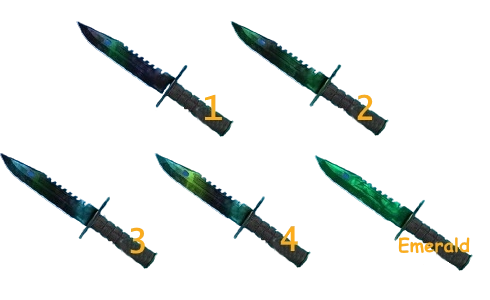
Different Gamma Doppler phases in CS2

Don't confuse Gamma Dopplers with standard Dopplers. The standard version has Sapphire, Ruby, and Black Pearl as its special phases. The Gamma version has only the Emerald. They share the phase system but that's about it.

Which Knives Are Available in Gamma Doppler?

The Gamma Doppler comes from two cases: the Gamma Case and the Gamma 2 Case. That limits which knife types can carry this finish:

  • Bayonet
  • Bowie Knife
  • Butterfly Knife
  • Falchion Knife
  • Flip Knife
  • Gut Knife
  • Huntsman Knife
  • Karambit
  • M9 Bayonet
  • Shadow Daggers

The Glock-18 Gamma Doppler is the one oddity here — it's the only non-knife weapon with this finish. It wasn't part of the original Gamma Case drop pool and behaves the same as knife versions in terms of phase variation.

Gamma Doppler Phase 1

Phase 1 is dominated by black, with green and turquoise shading across the blade. On models like the Butterfly or Bowie, bright green shows on the handle and guard. The Glock treats this differently — only the slide and unlock button pick up that color. The rest stays black.

Phase 1 is the least flashy of the bunch, which is exactly why it's the most accessible entry point. Prices typically run from $180 to $3,000 depending on knife model and float.

Gamma Doppler Phase 2

Here's where it gets interesting. Phase 2 runs about 80% green, 20% black — the closest any Restricted phase comes to replicating the Emerald look. The green is vivid, the darker details on handles and guards add contrast without killing the visual, and at lower float values it genuinely looks spectacular.

Phase 2 is the most expensive of the four Restricted phases, and for good reason. Traders call it the "budget Emerald," and that framing sticks because it's accurate. Demand for clean, low-float Phase 2 knives stays consistently strong even when the broader market softens. Prices range from $200 to $4,200.

Gamma Doppler Phase 3

Phase 3 adds cyan or aqua to the color mix. No single color takes over — you get green, black, and blue sharing the blade roughly equally, which creates a multi-toned look that some collectors genuinely prefer over Phase 2's more monochrome green.

Cheaper than Phase 2. Prices range from $180 to $4,000, though the ceiling is mostly theoretical for standard wear conditions. If you want to understand why float value affects that ceiling so significantly, our guide on what really matters in CS2 skins: float value, stickers, and patterns breaks it down well.

Gamma Doppler Phase 4

Phase 4 swaps the cyan out for lime green. The blade gets a warm, almost tropical look — smooth transitions between turquoise and lime, with the two greens blending rather than competing. It's visually distinct from Phase 3 and more energetic in character, which makes it a matter of personal taste whether you prefer it.

Priced between Phase 1 and Phase 2 generally, ranging from $180 to $3,500 depending on knife model and wear.

Emerald Gamma Doppler

Nothing else in the Gamma Doppler lineup comes close. The Emerald is pure, uniform bright green from blade to handle — no competing colors, no tonal variation, just clean green that catches light in-game in a way the other phases can't match.

It's also significantly rarer. The Emerald accounts for roughly 10% of all Gamma Doppler drops, which is why the price premium is so dramatic. We're not talking 20% more expensive — we're talking up to 900% more expensive than the other four phases.

Numbers: Shadow Daggers start around $550 at the low end. Karambits and Butterfly Knives in Factory New with low floats can push past $20,000. Minimal Wear versions of most models start around $7,000. Factory New starts around $12,000 and goes up steeply from there. The Emerald consistently ranks among the most expensive knife skins in CS2, and for most players it stays in "I'd buy one if I won something" territory.

How to Check Which Gamma Doppler Phase You Have

The phase appears in the item name, so this is less mysterious than it sounds. Three ways to confirm:

  1. In-game inspection: Right-click the item in your CS2 inventory, select "Inspect," and check the item name. Phase is listed directly.
  2. Steam inventory: Open your Steam inventory in a browser, use the "Inspect in Game" link. Third-party tools like CSFloat or SkinPort decode inspect links and show you the exact phase, float value, and pattern index.
  3. Third-party databases: CSFloat, CS.Money Wiki, and PriceEmpire all let you search by inspect link and return a full breakdown.

Understanding how CS2 skin float values really work helps too — especially for Gamma Dopplers, where the float range makes certain wear conditions extremely scarce.

The Price of Different Phases of Gamma Doppler Knives

Quick hierarchy before we go deeper:

  • Emerald is the most expensive phase by a wide margin, regardless of knife model.
  • Phase 2 is the priciest Restricted phase for almost every knife type.
  • Phases 1 and 3 sit at the lower end. Phase 4 lands somewhere in the middle, though knife model and market timing can shift that.
Most Affordable Gamma Doppler Knives
Most Expensive Gamma Doppler Knives

If budget is a real constraint, the best affordable knives under $350 in Counter-Strike 2 covers solid entry-level options across all finishes. For a longer view on how Gamma Doppler prices have moved over time, our analysis of Gamma Doppler price trends is worth reading before you pull the trigger on a purchase.

Other Factors Affecting Gamma Doppler Value

Phase is the starting point, but several other things can move the number significantly:

  • Float value: The Gamma Doppler float range is 0.00 to 0.08 — Factory New and Minimal Wear only. Within that already narrow band, knives close to 0.00 carry real premiums because they look cleaner and brighter. The gap between a 0.07 float and a 0.01 float matters more here than it would on most skins.
  • Rare patterns: Certain pattern indexes produce unusually clean or striking color distributions within a given phase. These outliers can price well above the standard range for that same phase and knife model. Our complete CS2 knife patterns guide goes into this in detail.
  • Well-Worn anomalies: This one surprises people — some Well-Worn Gamma Dopplers sell for as much as or more than Factory New versions. Why? Because getting a Well-Worn in a float range that maxes at 0.08 is absurdly rare. When one does appear, collectors pay for the oddity.
  • Knife model popularity: Karambit, Butterfly Knife, and M9 Bayonet consistently trade at higher prices across all phases. It's not about the finish — those three models just carry more demand.
  • Market timing: New case releases, Steam sale windows, and general market sentiment all shift prices. Buying during a quiet period between major releases usually gets you a better deal.

Which Gamma Doppler Phase Should You Buy?

Depends what you're after.

Best value entry point: Phase 1 or Phase 3 get you the Gamma Doppler finish without the Phase 2 premium. If you want to own one of these knives and aren't fixated on the greenest possible blade, either of those phases makes sense.

Best look per dollar spent: Phase 2. The dominant green does more visual work than any other Restricted phase, and the premium over Phase 1 is usually 10–30%, which feels justified when you actually see them side by side.

If budget genuinely doesn't matter: Emerald. It's not close. The uniform green blade is a completely different visual experience from anything in the Restricted tier, and it holds value better than any other phase over time.

For trading or investment purposes: Phase 2 and Emerald carry the most liquidity. If you plan to resell, these phases move faster and with less price negotiation than the others.

You can check your CS2 inventory value anytime using our free tool — useful if you're trying to figure out how a new knife fits into your overall collection budget.

Gamma Doppler vs Standard Doppler: Key Differences

Both finish types use the phase system and share the "Doppler" name. That's where the similarity ends.

The standard Doppler has more special phases and tends to get more attention, but Gamma Dopplers have a devoted collector base and the Emerald is genuinely rarer than Ruby or Sapphire in terms of visual impact. Full breakdown in our Doppler CS2 guide.

Methodology

Pricing references in this guide come from a 30-day rolling sample of Steam Community Market sold listings, cross-checked against active Buff163 and CSFloat listings as of late April 2026. Phase distribution percentages reflect the long-running community consensus around Gamma Doppler drops — including the Emerald accounting for roughly 10% of pulls — rather than a fresh sample we ran ourselves. Where supply for a specific phase + knife combo is too thin for a meaningful Steam median (sub-10 sales/month), we lean on the most recent reported third-party sale. Numbers move; treat them as a snapshot, not a quote.

Frequently Asked Questions About Gamma Doppler

Is Gamma Doppler Phase 2 worth the premium over Phase 1?

For most collectors, yes. The green-dominant look is meaningfully different from Phase 1's black-heavy appearance, and the price gap — typically 10–30% — reflects that. If you're comparing Phase 2 to Emerald, though, the value proposition flips: Phase 2 costs a fraction of Emerald's price while getting you roughly 70% of the visual.

Can you get a Gamma Doppler Glock from a case?

No. The Glock-18 Gamma Doppler wasn't part of the original Gamma Case or Gamma 2 Case drop pools. It's available on the Steam Community Market and third-party trading platforms, but it came through a different introduction mechanism.

What is the rarest Gamma Doppler knife?

A Karambit or Butterfly Knife Emerald with an extremely low float value — close to 0.00. These are genuinely scarce. We're talking among the most expensive skins ever sold in CS2, with prices that routinely exceed $20,000 and occasionally push much higher for exceptional examples.

CS2 Trust Factor Explained: How It Works & How to Improve It

2 ani în urmă

The CS2 Trust Factor is probably the most misunderstood system in Counter-Strike 2. It runs completely in the background — no visible score, no progress bar — and yet it shapes every competitive lobby you ever load into. High Trust Factor and you're playing with teammates who call out positions and stick together on retakes. Low Trust Factor and you're somehow always in the lobby with the guy who TKs at the start of every round.

What Is CS2 Trust Factor?

Trust Factor is a hidden reputation score Valve assigns to every Steam account. It first appeared in CS:GO back in 2017, carried straight into CS2, and remains a central part of how matchmaking works today.

The idea is simple enough: Valve tries to measure how trustworthy you are as a player, then pairs you with others who score similarly. Two players at identical skill ranks can have completely different competitive experiences depending on their Trust Factor — and if you've ever wondered why a friend seems to have a charmed matchmaking life while yours is a parade of suspicious spinbotters, this is often why. The same reputation signals also feed into how the platforms covered in our trading platform compendium screen for safer trades.

Trust Factor is influenced by a mix of signals:

  • Player reports — cheating, griefing, or abusive communication reports weigh heavily
  • Bans and enforcement history — VAC bans, game bans, cooldowns all leave marks
  • Steam account age and activity — older, well-used accounts score higher, full stop
  • Match completion rate — abandoning games hurts your score, and the system remembers
  • CS2 inventory and game library — owning games and skins signals you're an actual person, not a throwaway account
  • Behavior in other Steam games — your reputation follows you across the whole platform, not just CS2
  • Who you queue with — this one surprises people, but partying with low-trust players actively pulls your experience down

Valve keeps the exact algorithm private. Their reasoning is reasonable: if players know exactly what inputs go in, they'll optimize for the inputs rather than just playing fairly.

How CS2 Trust Factor Actually Affects Your Matches

Matchmaking in CS2 considers both your skill rank and your Trust Factor. Think of it as two separate axes — one for ability, one for behavior. The system tries to put you in lobbies that work on both dimensions.

High Trust Factor means cleaner lobbies. Fewer obvious cheaters, less griefing, teammates who communicate like adults. Low Trust Factor means the opposite — and the gap is noticeable enough that players with deliberately smurf accounts often remark on how much worse the lobbies feel compared to their mains, even when they're stomping everyone mechanically.

Two Gold Nova players, same rank, same region, wildly different experiences. The difference is almost always Trust Factor.

Does Prime Status Affect Trust Factor?

Yes, and Valve has said so officially. Prime Status positively impacts your Trust Factor and places you in separate matchmaking pools. Non-Prime queues have noticeably more suspicious accounts — that's not paranoia, it's what happens when there's no cost to creating a new account and jumping into competitive.

Does a VAC Ban Kill Your Trust Factor?

A VAC ban is permanent, cannot be appealed, and does serious damage to your account's standing. Any VAC ban from CS:GO also applies to CS2 on the same account — there's no escaping it by hoping a sequel would wipe the slate. Game bans and repeated competitive cooldowns are softer penalties, but they stack up and leave lasting marks.

How to Check Your CS2 Trust Factor

There's no dashboard, no score display, no percentage you can look up. Valve made it deliberately opaque. That said, you can get a rough read from a few indirect signals:

1. Party Warning Messages

When you form a competitive lobby, CS2 will sometimes show a warning if someone in your group has a significantly lower Trust Factor. The message is something like: "A member of your party has a low Trust Factor. Your matchmaking experience may be affected."

The color coding works like this:

  • Green — healthy Trust Factor, no worrying
  • Yellow — slightly degraded, some matchmaking impact
  • Red — low Trust Factor, expect rougher lobbies
2. The Quality of Your Games

Honestly, the most reliable indicator is just paying attention over time. If you're consistently landing in matches with wall-walkers and people who throw for fun, your Trust Factor might be lower than you think. Clean, competitive, reasonably pleasant lobbies most of the time? You're probably in decent shape.

3. Queue Times

Unusually long waits can suggest a lower Trust Factor. The system has to find trustworthy players in your skill range and region — if the pool it's willing to put you in is smaller, finding a match takes longer.

4. The "Looking to Play" List

When Trust Factor is healthy, this feature shows more active Prime players. A sparse list full of brand-new-looking profiles can be a soft signal that something's off.

What Actually Tanks Your Trust Factor

Some of this is obvious, some less so:

  • Getting reported frequently, even incorrectly — high report volume matters, even if individual reports are false
  • Abandoning competitive matches — this is probably the single fastest way to degrade your score
  • Getting kicked by teammates repeatedly — the system notices patterns here
  • A thin or new Steam account with few games and barely any activity
  • Shared or previously compromised accounts — if someone else used your account badly, you carry that history
  • Queuing with low-trust players — their score bleeds into your matchmaking experience
  • VAC bans, game bans, or stacked cooldowns
  • Documented griefing — team-killing, blocking, throwing rounds deliberately

One thing worth understanding: reports from other players carry real weight. A stream of false reports from salty teammates can temporarily dent your score even if you played completely clean. Valve tries to filter for accuracy over time, but the system isn't perfect, and patterns of reports — even baseless ones — do register.

How to Improve Your CS2 Trust Factor

No shortcuts exist here. I know that's not what people want to hear, but there genuinely aren't any. The strategies that work are slow and boring.

Play Clean and Actually Finish Your Matches

This matters more than anything else. Don't use cheats. Don't use exploits. Don't use anything that gives you an unfair edge — not because Valve will necessarily catch you, but because the Trust Factor system is watching patterns over time, and anomalous stats and behaviors will register. If you know you might have to leave mid-game, play Deathmatch or Casual instead of competitive.

If you want to optimize your CS2 settings for better performance, that's worth doing — fewer frustrating technical issues means fewer situations where disconnecting feels like the only option.

Treat Other Players Like People

Toxic behavior generates reports. Reports lower Trust Factor. That's the whole chain. You don't have to be cheerful, but you do need to avoid communication bans, avoid griefing even when your teammates are infuriating, and resist the urge to throw a losing game just to punish the team. Staying positive under pressure is one of the core habits that separate mentally resilient CS2 players from those stuck in a loop of bad lobbies.

Lock Down Your Steam Account

Enable Steam Guard and two-factor authentication. Link a valid phone number to your profile. A compromised account that gets used for cheating or spam after you get hacked will take the Trust Factor hit — and you'll have no recourse. Protecting your CS2 inventory from hackers goes hand-in-hand with protecting your Trust Factor.

Get Prime Status

If you haven't already, Prime Status is the most direct single upgrade you can make to your matchmaking experience. The separate queue alone is worth it, and the Trust Factor benefit is real.

Build Out Your Steam Profile

Valve's system treats thin accounts as suspicious, and frankly that's fair — most throwaway smurf and cheater accounts are bare-bones. Here's what helps:

  • Own games beyond CS2 — a real Steam library signals a real person
  • Keep your profile public — private profiles with no activity raise flags
  • Engage with the community — reviews, discussions, workshop subscriptions all count
  • Maintain a clean record across all games, not just CS2
  • Build your CS2 inventory — even a budget-friendly CS2 inventory signals investment in the game. Throwaway accounts don't usually have skins.

Play at Least Semi-Regularly

A dormant account that shows up once a month for a few games looks odd to the system. You don't need to play every day, but consistent activity — even a few sessions per week — keeps your profile looking like a genuine active player rather than an alt account being dusted off.

Pick Your Lobby Partners Carefully

This one gets ignored more than it should. If you're regularly queuing with friends who have low Trust Factor, VAC bans, or a long history of reports, your matchmaking experience suffers for it. And separately: be aware of people who might try to manipulate or compromise your account through social engineering — losing control of your account is one of the fastest ways to crater your standing.

How Long Does It Actually Take?

Weeks to months, not days. Trust Factor is cumulative — it reflects sustained behavioral patterns, not a single good stretch of games.

New accounts start lower by design. Valve wants to separate legitimate new players from the endless stream of smurf accounts, and account age is one of the signals they use to do that. If you're on a fresh account, plan for a few months of clean play before things start feeling better.

There's no console command, no third-party tool, no support ticket that fixes this faster. The only thing that moves the needle is consistent, positive behavior over time. Frustrating if you're starting from scratch, but at least the path is clear.

Trust Factor Myths Worth Killing

Some of these are surprisingly persistent:

  • "Expensive skins guarantee high Trust Factor." Having a valuable inventory helps signal legitimacy, but it's nowhere near the most important factor. Someone with a $2,000 inventory who abandons every other match and gets reported constantly will still have a wrecked Trust Factor.
  • "Services can boost your Trust Factor." These are either scams or account-compromising schemes. Valve's system updates based on actual behavior patterns — no external service has any pathway to influence it.
  • "Reporting someone always tanks their score." One false report from a salty opponent does almost nothing. What matters is volume and consistency across many different reporters over time.
  • "CS2 updates reset Trust Factor." They don't. Your Trust Factor is persistent, tied to your Steam account, and survives every patch, operation, and major game update.

Wrapping Up

CS2 Trust Factor is the invisible layer underneath every matchmaking decision Valve makes. The exact formula stays hidden, but the underlying logic isn't complicated: play fair, finish your matches, behave decently, secure your account, and build a legitimate Steam presence over time.

It's a slow process. There's no sprint to the finish. But the matchmaking experience you get with a healthy Trust Factor — cleaner lobbies, teammates who are actually trying, games that feel competitive rather than chaotic — is genuinely worth the patience it takes to get there.

How to Switch Hands in CS2: Left Hand Command & Bind

2 ani în urmăHow to Switch Hands in CS2: Left Hand Command & Bind

Switching hands in CS2 takes about five seconds. Press H and your weapon flips sides. That's the short answer. But if you want it on a specific key, set as a permanent default, or understand why it actually matters beyond looking different — keep reading.

How to Switch Hands in CS2

There are four ways to do this. I'll cover each one so you can pick what fits your setup.

Method 1: Press the Default Key (H)

The fastest option. During any match or practice session, press H and your weapon model flips to the opposite side. Press again, it flips back.

Valve added this shortcut when they re-introduced left-hand viewmodels in a CS2 update. It works out of the box — no console, no config files, nothing extra required.

Method 2: Use Console Commands (cl_righthand)

Open the developer console (press ~ or enable it under Settings > Game) and type:

  • cl_righthand 0 — weapon moves to the left hand
  • cl_righthand 1 — weapon moves to the right hand (the default)

There are also named commands if you prefer clarity over brevity:

  • switchhandsleft — switches to left hand
  • switchhandsright — switches to right hand

Hit Enter and the change is instant. Veterans from CS:GO will recognize cl_righthand — it's been the same command for years.

Method 3: Create a Custom Toggle Bind

This is the method most experienced players end up using. Open the console and type:

bind "v" "toggle cl_righthand 0 1"

Swap out v for whatever key you want. Every press toggles between left and right. A mouse side button works really well here — you can flip hands without moving your fingers off WASD. If H is already doing something in your config, this is how you move hand switching somewhere else.

Method 4: Change Your Default Hand in Settings

Want to always spawn with your weapon on a specific side? Set it permanently:

  1. Open CS2 and go to Settings.
  2. Go to the Game tab and find the Viewmodel section.
  3. Look for Preferred Viewmodel Left/Right Handedness.
  4. Pick Left or Right.

This sticks across all matches. You can still toggle mid-game with any method above — this just sets where you start.

How to Customize Your Hand Switch Keybind

If H doesn't work for you, rebinding takes thirty seconds:

  1. Go to Settings > Keyboard/Mouse.
  2. Scroll to Switch Viewmodel Left/Right.
  3. Click the current binding, press your new key.
  4. Done.

Many players move this to a thumb button on their mouse. The logic is simple — your thumb isn't doing much during normal play, so an idle button is a good home for something situational like hand switching. If you're doing a broader settings overhaul, check out best launch options for CS2 while you're at it.

Why Switch Hands? The Actual Reasons

Plenty of players discover this setting and assume it's just aesthetic. It's not, at least not entirely.

Better Visibility When Peeking Corners

Your weapon model blocks part of your screen. Peeking a right-side corner with the gun on the right hides exactly the area you need to see. Flip the weapon left and that sightline opens up. Left-side corners work the other way.

Players who bind a quick toggle can adapt mid-round depending on the angle. Holding a right-side peek? Weapon left. Rotating to a left-side hold? Weapon right. It sounds like a small thing until you start actually noticing how much the model obstructs your vision.

Eye Dominance and Comfort

Most people have a dominant eye — the one your brain leans on when both eyes can't agree on what they're seeing. Right-eye-dominant players sometimes prefer a left-hand viewmodel because the weapon sits away from their dominant visual field, reducing clutter in the area they process fastest. Left-handed players often switch purely because the left-hand model feels more natural.

There's no objectively correct setup here. The goal is reducing visual interference where it matters most for you specifically.

Tactical Advantage on Specific Map Positions

Some positions genuinely favor one hand over the other. Holding B tunnels on Dust II from the right side tends to be cleaner with a left-hand viewmodel. Watching long doors from A platform often feels better with the weapon on the right. If you play the same maps regularly, it's worth walking through key positions in a private server and testing both sides — after a few sessions you'll have a clear instinct for what's cleaner where.

Want to work on other aspects of your game while you're at it? Our guide on how to be a happier and better-performing CS2 player covers a lot more ground than just settings.

A Fresh Look at Your Skins

Switching hands mirrors the viewmodel — which means your skins look noticeably different on the left-hand version. Some finishes show off textures or wear patterns that the default angle hides. If you've put money into your loadout, it's worth seeing what your skins look like from both sides. Our CS2 skin showcase guide has more ideas for building an inventory worth admiring.

Does Switching Hands Affect Aim or Hitboxes?

No. Full stop.

Switching hands is a client-side visual change. Your character model, hitboxes, and bullet trajectory stay identical regardless of which side the weapon appears on. Nothing competitive changes. The server doesn't care.

One thing to know: when you switch hands mid-game, your weapon briefly goes through a re-equip animation — similar to switching weapons. During that moment, you can't fire. It's a fraction of a second, but don't toggle when an enemy is about to appear. Do it during rotations or when you have a safe moment behind cover.

Do Pro Players Switch Hands?

Yes — some actively toggle depending on which angle they're holding. Others play exclusively with a left-hand viewmodel for entire matches. A few don't bother at all. There's no consensus in the pro scene because the right answer depends on the player's dominant eye, muscle memory, and specific positioning habits.

If you're curious what else the pros are doing, our breakdown of CS2 pro player skins in tournaments shows what the top players are running in competition.

Pro Tips for Actually Using This Well

Practice in deathmatch before relying on it. The first few times you toggle mid-fight you'll hesitate. That hesitation goes away with reps — but it needs reps in lower-stakes situations first.

Map out the key positions. Spend one or two sessions in a private server walking through your most-played map and testing corners from both hand positions. Write down which spots benefit from which hand if you have to. After a week of real matches it'll be automatic.

Never switch when under threat. The re-equip delay is short but real. Peeking a corner and toggling at the same moment is asking to die. Reserve hand switches for rotations or when you're safely behind cover and know you have a second.

Try left-hand for a full week before writing it off. If you've never played with the weapon on the left, commit to it for seven days before deciding it doesn't work. Most players who switch dismiss it after twenty minutes. The adaptation period is longer than that — and a lot of people end up preferring it.

Switching hands also gives you a chance to see your weapon skins from a different angle — and the mirrored view can reveal details you'd never noticed. It's worth thinking about alongside skin conditions and wear values if you care about how specific finishes look in-game.

Frequently Asked Questions

What is the CS2 left hand command?

cl_righthand 0 in the developer console. That moves your weapon to the left side. cl_righthand 1 brings it back to the default right.

Can I bind hand switching to a mouse button?

Yes. In the console: bind "mouse4" "toggle cl_righthand 0 1" — replace mouse4 with whichever button you want. A side mouse button is usually the cleanest option since it doesn't interfere with movement keys.

Does the left hand viewmodel mirror my skin?

It does. The entire weapon model flips, including any skin or stickers you have applied. It's visual only and has no effect on gameplay. Some players enjoy checking how their best-looking CS2 skins look from the opposite angle.

Is there a way to auto-switch hands based on movement direction?

No built-in option exists. Scripts that try to automate this based on movement could also raise flags with anti-cheat systems. Manual toggling is the way to go — it's safe, it's reliable, and it takes maybe a week to become second nature.

Conclusion

Press H, type cl_righthand 0, or set up a toggle bind — whichever method you pick takes under a minute to configure. The bigger investment is learning when to actually use it: which corners open up with the weapon on the left, which positions feel cleaner on the right, and building the habit of switching during rotations rather than mid-fight.

Start with the default H key, spend a week noticing which angles benefit from a flip, and go from there.

The Most Expensive Skins Ever in CS2

2 ani în urmăThe Most Expensive Skins Ever in CS2

The most expensive CS2 skins are a strange category to wrap your head around. We're talking about virtual items — pixels attached to a gun model — trading for more than a used luxury car. Some for more than a house. And the people paying these prices aren't being reckless; they're responding to real scarcity, real demand, and a collector market that has quietly matured over a decade. Whether that strikes you as brilliant or absurd probably depends on whether you own any.

Below is a breakdown of the priciest skins ever recorded, what's actually driving the numbers, and why the list keeps getting more expensive year after year. If you want to see how your own collection compares, you can check your CS2 inventory value for free on our homepage.

Karambit Case Hardened Blue Gem

  • Estimated value: $1.5 million+

This one sits in a category by itself. The Factory New Case Hardened Karambit with pattern #387 — essentially full blue coverage on the play side — is widely considered the single most valuable CS2 skin in existence. Its current owner is a Chinese collector who has reportedly turned down private offers exceeding $2 million. No public sale has ever happened, and probably never will.

What makes this specific knife worth more than most people earn in a lifetime? Two things colliding: it's a Karambit, the most desirable knife model in the game, and it pulled the rarest Case Hardened outcome mathematically possible. Only one has ever been discovered. No duplicate has surfaced in the entire history of Counter-Strike. The supply is, quite literally, fixed at one.

For a deeper look at how knife pattern seeds affect pricing across the board, read our complete CS2 knife patterns guide.

StatTrak Factory New AK-47 Case Hardened #661 (Scar Pattern)

  • Estimated value: $800K to $1 million+

The #661 Scar Pattern AK-47 had been a grail for collectors for years before a StatTrak Factory New version finally surfaced in 2024 — and promptly sold for just over $1 million in a private transaction.

Why so much for an AK-47? The #661 pattern index gives the Case Hardened finish nearly full blue coverage across the body, making it the closest rifle equivalent to the Blue Gem Karambit. A StatTrak counter adds a layer of rarity on top of that. And "Factory New" means a float value low enough that the skin looks pristine rather than worn. All three of those conditions appearing simultaneously on a single skin hadn't happened in over a decade of case openings before this one was unboxed.

Our guide to CS2 skin patterns worth thousands of dollars breaks down exactly how pattern IDs determine which Case Hardened outcomes are worth $50 versus which ones are worth a fortune.

Souvenir AWP Dragon Lore

  • Price: up to $400,000+

No skin is more closely identified with CS prestige than the Souvenir AWP Dragon Lore. It drops exclusively through Souvenir Cobblestone Packages during Major tournaments — packages you receive by watching matches, not by spending money directly — and the odds of pulling a Dragon Lore from one sit around 0.026%. Factory New versions are exceptionally rare. The handful that exist in near-perfect condition have sold for well above $200,000, and specific stickered crafts have been reported near $400,000.

The interesting thing about the Dragon Lore is how stratified its pricing is by condition. A Battle-Scarred copy might cost $15,000-$30,000, still a serious sum, but it can't touch the prices commanded by Factory New specimens. That gap — sometimes ten-to-one between worst and best condition — is more extreme for the Dragon Lore than for almost any other skin, because collectors specifically want the display-piece version. If you're building a dream collection, our list of 20 CS2 skins every collector dreams of owning is worth reading alongside this one.

Sports Gloves Pandora's Box

  • Price: $40,000 to $60,000 per pair

Around 29 Factory New pairs ever recorded. That's the number that explains everything about the Sports Gloves Pandora's Box price. The dark purple-and-teal colorway is distinctive enough that you can spot one across a trade lobby instantly, and the supply is so constrained that even slightly-worn versions trade in the tens of thousands.

Compare that to the Sports Gloves Vice — a similarly popular design — which sits at $14,000-$20,000 in Factory New condition with around 117 units on record. Still absurdly expensive. But Pandora's Box has less than a quarter of that supply. The premium makes sense when you look at it as pure scarcity economics.

For more top-tier glove options, see our guide on the 12 CS2 gloves every high-roller wants.

AWP Gungnir

  • Price: ~$12,500 (Factory New)

The Gungnir gets called the "spiritual successor" to the Dragon Lore a lot, mostly because it's another AWP from a collection-exclusive drop pool. The Norse mythology design is genuinely striking — it's one of the few skins that looks unmistakably premium even at a glance — and Factory New copies trade around $12,500. Battle-Scarred versions still run roughly $7,000, which tells you something about how tight the supply is across all wear tiers.

Unlike the Dragon Lore, you can't get a Gungnir from a Souvenir package. The St. Marc Collection only drops in-game or through expensive trade-up contracts. That restricted pipeline is exactly what keeps new supply from flooding the market, and some collectors who got in early have watched their copies appreciate substantially. Whether that trend continues is harder to say — market analysts seem genuinely split on the Gungnir's long-term trajectory.

Butterfly Knife Lore

  • Factory New: $9,000 to $10,000
  • Well-Worn / Battle-Scarred: a few hundred dollars

The price gap between Factory New and the lower wear tiers is particularly dramatic here. A Battle-Scarred Butterfly Knife Lore is a few hundred dollars; a Factory New one is ten thousand. The flip animation that made the Butterfly Knife famous shows best when the blade looks clean, which means collectors specifically chase Factory New copies and will pay a large premium to get them.

Recent sales data has the FN price climbing steadily. Holders are probably better off sitting on copies for now, though that's always easier advice to give than to follow when you're looking at five figures tied up in a virtual knife. For broader knife pricing context, see our list of the most expensive knives in CS2.

M4A4 Howl

  • Price: $8,000 to $20,000+

The M4A4 Howl is the only Contraband skin in CS2 — a rarity tier that exists precisely because this skin had to be reclassified after a copyright dispute over the original artwork. Valve removed it from case drops, redesigned the graphic, and reclassified all existing copies as Contraband. No new Howls will ever enter circulation. That's a hard cap on supply in a game that otherwise constantly generates new inventory through case openings.

A clean Factory New copy without stickers trades around $8,000-$9,000. StatTrak pushes it to roughly $13,000. And if someone applies a set of Katowice 2014 Holo stickers to one — those are their own category of expensive — certain crafts have sold north of $20,000. The Howl is basically a case study in what happens when supply becomes truly fixed: price has nowhere to go but up, and patient holders have been rewarded.

AK-47 Wild Lotus

  • Factory New / Minimal Wear: around $12,000-$17,000
  • Battle-Scarred or Well-Worn: between $3,500 and $4,700

The Wild Lotus comes from the same St. Marc Collection as the Gungnir, which means the same supply constraints apply: rare in-game drops only, no case unboxing. The floral design — pink lotus blossoms on a teal background — is one of the more distinctive AK-47 finishes in the game, and it's polarizing in a way that seems to help its price. People who like it really like it, and that intensity of demand matters.

What's notable is that even the Battle-Scarred version sits at $3,500-$4,700. That's not cheap. The price floor across wear tiers is much higher than you'd see with case-unboxable skins because there's no mass-market entry point — you're paying collection-drop prices no matter which condition you buy. If you're weighing whether skins like this are actually worth what the market says, our breakdown of what really matters in CS2 skin valuation is a useful reality check.

AK-47 Gold Arabesque

  • Price: $9,400 (Factory New Covert)

The Gold Arabesque covers the AK-47 in an ornate gold finish that reads as flashy in a way most skins can't quite achieve. Factory New Covert — the rarest standard rarity tier — runs around $9,400.

There's also a Souvenir variant that has sold for over $11,000. Souvenir skins are the ones you receive from watching Major CS2 tournaments, and the odds of getting a high-tier drop are brutal. That extra layer of acquisition difficulty, combined with the gold aesthetic that has broad cross-regional appeal among collectors, keeps the Gold Arabesque near the top of any serious list of valuable CS2 skins.

StatTrak AK-47 Fire Serpent

  • Price: ~$4,200 (Factory New)

The AK-47 appears on this list more than any other weapon, which shouldn't surprise anyone who's played Counter-Strike seriously. It's the dominant rifle, which means demand for premium AK skins doesn't plateau the way it might for secondary weapons. The Fire Serpent comes from the Operation Bravo Collection — one of the earliest discontinued collections — and a Factory New StatTrak version currently runs around $4,200, with the price trending upward as existing copies age and the remaining supply thins out.

No new Fire Serpents can enter the market through case openings. Rare in-game drops are the only new supply, and those are infrequent enough that they barely register. For collectors thinking about this as a long-term hold, our analysis of the economics behind CS2 skins as digital collectibles covers exactly these kinds of supply-constraint dynamics.


What Actually Makes CS2 Skins This Expensive?

The prices above don't happen by accident. A few distinct forces combine to push skins into six- and seven-figure territory:

  • Fixed or shrinking supply. Discontinued collections, Contraband items, and one-of-a-kind pattern seeds have no mechanism for new inventory. As copies drift onto inactive accounts or get held by collectors who won't sell, the liquid supply shrinks over time — which is exactly what happened with the Fire Serpent and Wild Lotus.
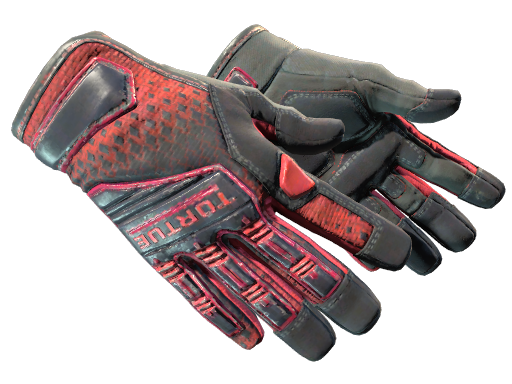
  • Float value and condition. A Factory New skin with a float near 0.00 commands a substantial premium over a Field-Tested copy of the same item, especially for skins where the visual degradation is obvious. The CS2 skin conditions guide explains how wear levels affect both appearance and price in detail.
  • Pattern index. For Case Hardened skins, the pattern seed determines blue coverage percentage. The difference between a $50 Case Hardened and a $1 million one is almost entirely the pattern index number. Seeds like #387 and #661 are statistically rare favorable outcomes — you can open cases for years and never pull one.
  • Sticker crafts. Applied Katowice 2014 Holo stickers or other sought-after tournament stickers can multiply a base skin's value several times over. The stickers themselves trade for thousands of dollars each, and the combination of rare skin plus rare stickers creates something that appeals to a collector subset willing to pay a serious premium.
  • Weapon tier. The AK-47, AWP, and M4A4 are the weapons that define competitive CS2. Skins for the most-played weapons attract the largest buyer pools, which drives both liquidity and price.
  • Investment behavior. A meaningful portion of expensive skin buyers aren't planning to use them in-game. They're buying as long-term holds, which reduces the liquid supply further and creates upward price pressure as more copies leave active circulation.

Methodology

Pricing references in this guide come from public CSFloat and Steam Community Market listings, plus reported transaction data points from r/GlobalOffensive and r/csgomarketforum, captured as a snapshot in late April 2026. Single-pattern items like the Karambit Blue Gem #387 and AK-47 Case Hardened #661 are valued on the most recently reported transaction or declined offer, since these don't trade often enough to anchor a Steam median. Supply counts (29 Pandora's Box pairs, ~117 Vice pairs) reflect community-tracked numbers from float-database scrapers and trade-tracker spreadsheets — they're best-effort, not Valve-confirmed. Numbers move; treat them as a snapshot, not a quote.

For a full breakdown of the top 25 highest recorded sales, see our top 25 most expensive CS2 skins ever sold list.

Best AK-47 Skins in CS2: Top 5 Ranked

2 ani în urmăBest AK-47 Skins in CS2: Top 5 Ranked

The AK-47 is the weapon most players have a relationship with in Counter-Strike 2. You know the spray pattern, you've memorized the reload animation, and at some point you decided it deserved a proper skin. The question is which one.

There are dozens of AK-47 skins in CS2, ranging from a few dollars to genuinely expensive. These five stand out based on design quality, community longevity, and overall value — though your priorities may differ. Skin conditions affect price significantly, especially for detailed artwork, so always check the float value before buying. And if you want to see what your current collection is worth, check your CS2 inventory value in seconds.

5 Best AK-47 Skins in CS2

1. AK-47 | The Empress

  • Added: 14 September 2017
  • Case: Spectrum 2 Case
  • Collection: The Spectrum 2 Collection
  • Rarity: Covert (Red)
  • Price range: ~$25 (Battle-Scarred) to ~$600 (Factory New)

This is the one that genuinely looks hand-painted. The Empress wraps the entire rifle in royal heraldry — a dominant figure surrounded by floral motifs in gold, deep red, and sea-green — and it works because the design was clearly built for the weapon's specific shape rather than slapped on.

Float value matters more here than almost any other AK skin. A Factory New Empress is a different object than a Battle-Scarred one; the artwork degrades visibly. Understanding how float values work is genuinely worth your time before dropping $200+ on this. If you're buying to display, go FN. If you just want the look in-game at a reasonable price, Field-Tested around $50–70 is the sweet spot.

The $600 ceiling for Factory New is high for an AK skin. It holds that price because nothing else in the game quite replicates this aesthetic — regal, detailed, old-world. Whether that's worth it depends entirely on you.

2. AK-47 | Neon Rider

  • Added: 3 August 2018
  • Case: Horizon Case
  • Collection: The Horizon Collection
  • Rarity: Covert (Red)
  • Price range: ~$40 (Battle-Scarred) to ~$160 (Factory New)

Cyberpunk energy, executed well. The Neon Rider puts neon blues, purples, and pinks over a glossy black base with a stylized rider graphic, and it's one of the skins that genuinely looked better after the CS:GO-to-CS2 transition. The Source 2 lighting engine makes the neon colors react differently across map environments — you'll notice it most on Inferno and Mirage when the light hits right.

At ~$160 Factory New, the price is fair for a Covert. It's also a strong sticker canvas if you want to lean into the neon aesthetic — check our guide on rifle sticker placement for maximum value if you want to maximize that investment.

The one caveat: because the design is bold, it either clicks for you immediately or it doesn't. There's no middle ground with this skin.

3. AK-47 | Redline

  • Added: 20 February 2014
  • Case: Operation Phoenix Weapon Case
  • Collection: The Phoenix Collection
  • Rarity: Classified (Pink)
  • Price range: ~$8 (Field-Tested) to ~$35 (Factory New)

Ten years old and still relevant. That's not easy to achieve in a skin meta that cycles constantly.

The Redline's matte-black finish with red racing stripes is clean, understated, and doesn't age. It's also one of the few skins under $35 that doesn't look like a budget compromise — it looks intentional. Part of why it survives is that simple designs don't degrade the way detailed artwork does. A Field-Tested Redline at $8 looks almost identical to a Factory New at $35.

Then there's the sticker angle. The Redline's dark surface makes it one of the best canvases in the game for high-end sticker crafts. Katowice 2014 holographic stickers on a Redline body are some of the most valuable combinations in CS2 history — we're talking items that have sold for five figures. If you're building a collection on a budget, this is where I'd start. Our guide to the best-looking CS2 skins under $10 has more options at this price point.

4. AK-47 | Asiimov

  • Added: 6 December 2018
  • Case: Danger Zone Case
  • Collection: The Danger Zone Collection
  • Rarity: Covert (Red)
  • Price range: ~$30 (Battle-Scarred) to ~$250 (Factory New)

The Asiimov design language is one of the most recognized in Counter-Strike — black and white with orange accents, clean geometry, nothing extraneous. It appears on the AWP, P90, and several other weapons, but the AK version has its own character because the rifle's longer profile suits the layout well.

Two practical things worth noting. First, the bright orange and white sections are genuinely more visible in dark map areas, which sounds like a minor point but becomes noticeable when you're watching your own demos. Second, all Asiimov variants across weapons hold their value reasonably well because demand stays consistent — the skin appeals equally to players who just want something that looks good and collectors who track price trends. If you're thinking about the investment angle, our guide to CS2 skin investing goes deeper on what drives long-term value.

Why the Asiimov Holds Its Value

Consistency of demand is the short answer. The Asiimov doesn't spike with trends or crash when meta changes — it has a stable audience that keeps replenishing. That's rarer than you'd think in this market.

5. AK-47 | Bloodsport

  • Added: 16 March 2017
  • Case: Spectrum Case
  • Collection: The Spectrum Collection
  • Rarity: Covert (Red)
  • Price range: ~$80 (Battle-Scarred) to ~$400 (Factory New)

The Bloodsport is the most recognizable AK skin in kill feeds. The red-black base with white geometric logos reads instantly at small sizes, which matters more than people realize — content creators and professional players gravitate toward it specifically because it photographs and streams well, not just because it looks good in hand.

At ~$80 for Battle-Scarred and ~$400 for Factory New, it's the most expensive skin on this list at the low end. Whether that's justified depends on whether you care about that visual identity. For competitive players who stream or create content, it probably is. For everyone else, there are similar aesthetics at lower price points.


Methodology

Price ranges in this guide come from a 30-day rolling sample of Steam Community Market sold listings, cross-checked against active Buff163 and CSFloat listings as of late April 2026. The wear-band ranges (Battle-Scarred floor through Factory New ceiling) reflect typical specimens — pattern-index outliers and ultra-low-float examples can sit well above the upper bound and we note that inline where it matters. Where Steam Market depth is thin in a given wear, we lean on the most recent reported third-party sale. Numbers move; treat them as a snapshot, not a quote.

How to Choose the Right AK-47 Skin

Budget, aesthetic preference, and whether you care about long-term value will point you toward different choices here. A few things worth thinking through:

  • Float value: Matters dramatically for detailed skins like The Empress, barely at all for simple designs like the Redline. Learn more about how float values work in CS2 before buying anything over $100.
  • StatTrak availability: All five skins have a StatTrak variant. Expect to pay 30–100% more — and consider whether kill tracking actually matters to you or if you're just conditioned to want it.
  • Sticker compatibility: Darker skins — the Redline and Neon Rider especially — are the strongest canvases for high-end sticker crafts. Light-colored skins like the Asiimov are harder to apply stickers to without clashing.
  • Pattern index: Some skins have subtle pattern variations that command premiums. Our guide to undervalued AK-47 patterns covers what's worth paying attention to.

Honorable Mentions

Four skins that didn't make the main list but belong in the conversation:

  • AK-47 | Vulcan — Clean blue-and-white mechanical design, quietly popular with pro players who find the Asiimov too flashy.
  • AK-47 | Fire Serpent — Hand-painted Mayan-inspired artwork from Operation Bravo. Old, rare, expensive. The kind of skin people hold onto for years.
  • AK-47 | Wild Lotus — The most expensive AK skin in the game. Stunning floral design from the discontinued St. Marc Collection, which is part of why it costs what it costs.
  • AK-47 | Case Hardened — Technically a simple skin, but specific pattern seeds — particularly "Blue Gem" patterns with high blue coverage on the top wood — have sold for hundreds of thousands of dollars. Pattern index gambling at its most extreme.

Several of these appear in discussions of the most iconic CS2 skins of all time — and for good reason. They've shaped how the skin economy evolved.

Final Thoughts

If I had to pick one for most players: the Redline. Affordable, timeless, works as a sticker base, doesn't demand constant upkeep of a pristine float. The Empress is the prestige pick if you want something genuinely impressive and don't mind the price range. The Asiimov sits in the middle — not cheap, not extravagant, reliably good.

The AK-47 is the weapon you'll use more than anything else in CS2. It deserves a skin you actually like looking at.

Want to see how these fit into your overall loadout value? Check your CS2 inventory to track your collection and find out what your skins are really worth.

What Is the Value of My CS2 Inventory?

2 ani în urmăWhat Is the Value of My CS2 Inventory?

Most people have no idea what their CS2 inventory value actually is. That skin you picked up from a case two years ago? The knife you got in a trade you barely remember? Add it all up and you might be sitting on a few hundred dollars — or considerably more — without ever having checked. Between float values, pattern indexes, sticker premiums, and marketplace price gaps, figuring out the real number isn't as obvious as it sounds.

This guide walks you through how to check your CS2 inventory value, what actually drives individual skin prices, and what your options are once you know the number — and pairs naturally with our deeper skin price formation guide.

How to Check Your CS2 Inventory Value

The fastest way to get your CS2 inventory value is a dedicated calculator. You'll need one of the following to identify your account:

  • Your Steam profile URL (e.g. https://steamcommunity.com/profiles/76561198000782895)
  • Your SteamID64 (e.g. 76561198000782895)
  • Your custom Steam username (e.g. https://steamcommunity.com/id/LeBiduleYT or just LeBiduleYT)

Then go to cs2-inventory.com and enter this in the "Enter your nickname or STEAM ID to calculate your inventory value" field, then click "Get Inventory".

Within seconds you get a full breakdown — total value in dollars, individual item prices, the whole thing.

Make Your Steam Inventory Public First

One thing that trips people up: if your Steam inventory is set to private, no calculator in the world can read it. Your inventory needs to be public before anything works.

To change the setting:

  1. Open Steam and log in to your account
  2. Click your username in the top-right corner and select "View Profile"
  3. Click "Edit Profile" and go to "Privacy Settings"
  4. Under "Inventory", change the setting to "Public"

You can switch it back to private after you're done.

What Factors Affect Your CS2 Inventory Value?

Here's where it gets interesting — and where most players leave money on the table by not paying attention.

Skin Condition and Float Value

Every CS2 skin has a float value between 0 and 1. Lower float means less wear, which means higher price. Simple in theory. In practice, the spread between a Factory New and a Battle-Scarred version of the same popular skin can be dramatic — easily 5x to 10x the price.

Always check the float before assuming a skin's value. A Field-Tested skin near the top of its float range behaves completely differently from one at the bottom. For a proper breakdown of how condition affects pricing, see our complete guide to CS2 skin rarity and value.

Rarity Tier

CS2 skins sit across a rarity ladder, from Consumer Grade (the stuff you open and forget immediately) up to Covert (genuinely rare). Knives and gloves live in their own category above Covert, which is why a single knife can represent the majority of a player's entire inventory value.

  • Covert and Classified skins usually carry the most weight
  • Mil-Spec and Restricted skins fill out most everyday inventories
  • Rare special items — knives, gloves — are the outliers that distort the total

If you own a knife or a set of gloves, they're almost certainly what's driving your number.

Pattern Index and Special Variants

This is the part most casual players don't know about. Some skins don't look identical across every drop — the in-game rendering uses a pattern index that shifts how a texture maps to the weapon model. For certain skins, that variation creates enormous price gaps between a "bad" pattern and a rare one:

  • Case Hardened "Blue Gems" — patterns with high blue coverage command multipliers of 10x, 50x, or more over the base price
  • Fade percentages — the more fade coverage, the higher the ask
  • Crimson Web spider web placement — a centered web on the right spot is dramatically more desirable than one tucked in a corner

If you own any of these skin families, look up your specific pattern index before assuming you know the value. Our article on the most expensive skins ever in CS2 gives you a sense of just how far premium patterns can take a price.

Stickers

Applied stickers are worth actual money — and a lot of players undervalue them. A rare tournament sticker from an early major can add hundreds to a skin's price, sometimes more than the weapon itself. The variables that matter:

  • The sticker's own rarity and current market price
  • Its condition (scraped down stickers lose most of their premium)
  • Its placement — some positions just look better
  • How well it fits visually with the skin

Some crafted combinations are genuinely collectable and sell well above what you'd expect from the individual parts.

StatTrak and Souvenir Variants

StatTrak™ versions track kill counts and carry a price premium that typically runs 20–50% above the standard version. Not always — for very cheap skins the premium is smaller — but for anything popular, the gap is real.

Souvenir skins dropped at CS2 Major tournaments are a different animal. They're tied to specific matches, often extremely limited, and can command serious premiums — especially if the match was memorable or the drop quality was unusual. These are some of the hardest-to-price items in the game.

Why Prices Vary Between Marketplaces

Your CS2 inventory value is not a fixed number. It shifts depending on which marketplace you're using as a reference, and the differences can be meaningful. The Steam Community Market is the standard benchmark most calculators default to, but third-party platforms routinely show different prices because of lower fees and different buyer pools.

If you're thinking about selling, check our ranking of the best CS2 marketplaces before you list anything — some items do significantly better on specific platforms. There's also the liquidity problem, which is worth understanding: an expensive skin with almost no buyers is not worth its listed price in any practical sense. Our piece on CS2 skin liquidity covers exactly this — why certain high-value skins sit forever and how to spot the difference between real demand and inflated listings.

What Can You Do With Your CS2 Inventory?

Once you have a number, you have options. Four real ones:

  • Hold — Some skins appreciate over time, particularly from discontinued cases. Early cases that no longer drop are a classic example. Not everything holds value, but the right items do.
  • Sell — Convert to cash or Steam wallet funds. Where you sell matters as much as what you're selling. Match the item to the right platform.
  • Trade — Peer-to-peer swaps to upgrade your collection without putting in new money. Takes more time, but the value efficiency is often better than going through a marketplace.
  • Invest strategically — Take proceeds and move them into undervalued skins with stronger growth potential. This is basically how the skin market's most active traders operate.

For a full walkthrough on converting inventory to actual money, read our guide on earning money with your CS2 inventory. If you're ready to sell now, the ultimate guide to selling CS2 skins covers every available method.
How Big Can a CS2 Inventory Get?

Bigger than most people expect. The most expensive CS2 inventories in 2024 reached values in the hundreds of thousands of dollars — driven almost entirely by rare knives, pattern-specific blue gems, and gloves. Not exactly typical.

For most players, the number is far more modest. But it's still worth knowing. A collection built over years, even from common drops and cheap cases, often adds up to more than expected — especially if you've been holding items from early cases that stopped dropping a long time ago. Those have a quiet kind of scarcity that the market rewards.

Frequently Asked Questions

Is the CS2 inventory value calculator free to use?

Yes. The cs2-inventory.com calculator is completely free — enter your Steam ID or profile URL and you get your total inventory value instantly.

Why does my inventory value differ between tools?

Different calculators pull from different price sources. Some use the Steam Community Market's 7-day average, others pull real-time data across multiple third-party platforms. The same inventory can show different totals depending on which data source the tool prefers. Neither is necessarily "wrong" — they're just measuring different things.

Can I check someone else's CS2 inventory value?

Yes, as long as their Steam inventory is public. Enter their Steam ID or profile URL exactly as you would your own.

Does my CS2 inventory value include all items?

Most calculators include all tradeable items: weapon skins, knives, gloves, sticker capsules, cases, and music kits. Non-tradeable items — like certain promotional drops — may not appear.

How often do CS2 skin prices change?

Constantly. Daily fluctuations are normal, and major moves happen around game updates, new case releases, esports events, and whenever a streamer shows something off to a large audience. Checking your inventory value once and treating it as fixed will give you a stale picture pretty quickly.

The Most Expensive CS2 Inventories: Top Players & What They Own

2 ani în urmă

The Most Expensive CS2 Inventories: Top Players & What They Own

Most Counter-Strike 2 inventories top out somewhere between $50 and a few hundred dollars. Then there are these accounts. The most expensive CS2 inventories aren't collections in any casual sense — they're portfolios worth hundreds of thousands, sometimes well past a million dollars, built around Karambit Blue Gems, Souvenir Dragon Lores, and esports stickers that cost more than most people's cars.

The motivations vary more than you'd expect: investment, genuine obsession, prestige, personal taste, or something murkier — and the patterns at the top echo the skin portfolio framework we use as a reference. Want to see how your own collection stacks up? Use our CS2 inventory value calculator to estimate your own inventory's value and figure out where you actually stand.

This guide covers what defines a "most expensive" inventory, how those inventories are typically composed, the names that publicly recur in the trader media, how the rankings have shifted in 2025-2026, and what reality check you should apply before quoting any of these dollar figures.

Methodology — How These Valuations Are Built

Every dollar figure in this article is estimated using Steam Market and Buff163 public listings as of mid-2026, cross-referenced with the public showcase profiles maintained by trade trackers. We use ranges where the underlying items don't trade often enough on the open market to anchor a precise number. A few specific reasons the numbers are necessarily fuzzy:

  • Auction-only items. Some pieces — a Katowice 2014 Titan Holo applied to a Factory New AWP, or a Karambit Case Hardened with a top-five Blue Gem pattern — don't trade on the Steam Market at all. They change hands through private deals or specialized auctions where rare patterns set prices that no algorithm can predict.
  • Multiple accounts. Plenty of serious collectors spread their holdings across several accounts, sometimes private, either for security, confidentiality, or because one inventory literally runs out of space.
  • Market drift. Skin prices move constantly. A collection valued at $1.5M today can read $1.2M or $1.8M next month depending on a Valve update, a tournament, or just a slow week on Buff163.
  • Buff163 vs Steam Market spread. Steam Market caps payouts at $2,000 and runs a 13% fee. Buff163 quotes the headline retail price for the same item far higher. Pick the wrong reference and you'll be off by 30%+ before you even start.

When in doubt below, prefer the lower bound of the range. Anyone telling you they know a private collector's exact net worth in skins is guessing.

What Actually Defines a "Most Expensive" Inventory

A handful of asset classes recur in every top-tier inventory we've tracked since 2018. If you want to recognize a serious collection at a glance, look for these:

  • Rare knives. Karambit Case Hardened with Blue Gem patterns (the top patterns clear $100,000 routinely on Buff163), Fade knives in 100% / 95%+ Fade, Doppler Sapphires and Black Pearls, M9 Bayonet Crimson Web in low-web counts. These are the blue-chip holdings of the CS2 economy: scarce, recognizable, and liquid enough to actually sell when needed.
  • Gloves. A full set of high-roller Sport Gloves or Specialist Gloves in Factory New, particularly the Pandora's Box, Vice, Amphibious, and Crimson Kimono finishes, easily clears the price of several knives combined.
  • Legendary rifles. AWP Dragon Lore (especially the Souvenir version with Katowice 2014 stickers applied), M4A4 Howl in low float, AK-47 Case Hardened with Tier 1 patterns. These are the names every conversation about the most expensive knives in CS2 and rifles eventually circles back to.
  • Sticker crafts. A Souvenir Dragon Lore with four Titan Holo Katowice 2014 stickers applied — that's not really a skin anymore, that's a sticker craft, and the math goes from rifle pricing into pure-sticker territory. Crafts of this scale are why a top inventory can be worth more than the sum of its weapons.
  • Rare patterns. Pattern indexes matter as much as float on a handful of items. Case Hardened Blue Gems, Fade percentages, Marble Fade Fire & Ice, AK-47 Wild Lotus position. A 661 pattern Case Hardened Karambit at any float is worth a multiple of the same skin with a non-pattern roll.
  • Early tournament stickers and capsules. Katowice 2014, Cologne 2014, and DreamHack 2014 capsules and stickers. Supply only ever decreases — every Titan Holo applied to a rifle is one fewer in unattached circulation. This single asset class explains a meaningful share of the wealth at the top of the rankings.
  • Esports containers from 2013-2014. The cases and capsules from the first year of CS:GO esports operate on a similar logic: fixed supply, perpetually decreasing as players open them, and demand growing with the player base.

Notable Owners — The Names That Recur Publicly

Anonymity is the norm at this level. The biggest collectors typically use Steam display names that don't tie to any real-world identity, and several of the largest inventories are spread across private profiles. The names below either show up on public showcase trackers or have been referenced repeatedly across trader media on Reddit, YouTube, and the major skin forums.

阿乐 — Knife-Heavy, Pattern-Driven

The largest inventory we've been able to verify on public trackers in recent years belongs to a Chinese collector showing under the handle 阿乐. Estimated value sits in the $1.5M-$1.7M range as of mid-2026 (Buff163 retail anchor). The composition is built almost entirely around knives — and not just any knives. Four Karambit Case Hardened with strong Blue Gem patterns sit at the core. Pair that with an M4A4 Howl and an AWP Dragon Lore, and the valuation makes sense before you count the rest.

A top-tier Karambit Blue Gem alone routinely clears $100,000. The Dragon Lore — depending on float and condition — usually trades above $10,000 even in non-Souvenir form. This is less a collection and more a curated museum of the trophies every serious collector dreams of owning.

Senpai Chckeeey — Pure Investment Logic

Estimated $1.2M+ before the account went private (and going private is itself a tell). Before it did, the inventory was stacked with astronomical quantities of high-value containers, sticker capsules, and esports memorabilia — not knives, not skins. The strategy here is straightforward and patient: buy esports capsules and rare sticker capsules in bulk before supply dries up, then hold. Almost certainly a Chinese investment account. It's the textbook fixed-supply approach at a scale most people never attempt.

黑猫-AFK (Black Cat) — Fades + Major Holos

Estimated $1.0M-$1.1M. Black Cat built around Fade knives in nearly every type, paired with a deep stockpile of high-value Major holo stickers. It's one of the more aesthetically coherent top-tier inventories — the kind where you can tell there's actual taste driving the purchases rather than pure ROI calculation.

The interesting development since 2024: Black Cat has been steadily selling sticker positions and rotating that capital into more knives. That shift could mean a few things. Maybe sticker prices have peaked relative to expectation. Maybe rare knife finishes look like better long-term holds at current levels. Either way, it's not random — this collector is making an active call about which knife patterns offer better appreciation from here.

至臻胖花花 (Niecolas) — The Player-Collector

Roughly $850K. 34 knives. 14 AWPs. A full set of high-roller gloves. Numerous operator skins on top of that. This one reads differently from most inventories at this tier — it looks like someone who actually plays the game. Not a holding account, not a pure speculation play. Personal enjoyment is baked into these choices.

Path — All-In on Esports Stickers

Around $830K. Almost everything points to one strategy: esports stickers, particularly from early tournament capsules that Valve no longer drops. The logic is almost elegant in its simplicity. Stickers from early Counter-Strike tournaments can cost more than knives, and supply only falls as collectors apply them to weapons. Path found the trade, sized up, and waited.

Jakeem — Built From the Ground Up

Around $830K. 126 stickers, 64 lootboxes, 18 snipers — three categories, each with clear appreciation logic, no overlap, no redundancy. The detail that actually impresses: this inventory appears to have been built through CS2 grinding and smart trading alone, with no obvious injection of external wealth. Building $800K+ from scratch is not common. It's proof at scale that earning money with CS2 skins is achievable, not just theoretical.

Nico 宝贝 — Quality Over Quantity, Taken to the Extreme

Around $780K with probably the fewest total items on this list. 3 Souvenir Dragon Lores. 6 of the rarest knives in CS2. When individual skins cost as much as a used car, quantity becomes beside the point. This is the most extreme "concentration over breadth" position at the top of the rankings.

Elsa needs AIM — A Single Knife, Then Capsules

Around $730K. One knife. Everything else: lootboxes and esports sticker capsules. The single knife suggests this account isn't purely dead storage — someone probably queues up occasionally. But the strategy is all investment. Early esports containers from 2013-2014 have appreciated by thousands of percent over their original prices.

dog goes woof — Volume Across Variety

Around $715K. 58 knives across dozens of finishes and types. This inventory has a completely different character from the Blue Gem-heavy top of the list — less prestige hunting, more genuine variety. Average per-knife value is much lower than 阿乐 or Nico, but the volume adds up fast.

quY — The 503-Knife Outlier

Around $650K. 503 knives. That number is almost absurd. Most CS2 players have never even seen 503 knives outside of a showcase video, let alone owned them. quY isn't chasing specific valuable patterns — it's a comprehensive approach, built around personal taste and sheer volume rather than trophy hunting.

What Changed in 2025-2026

A few things have moved the rankings since the original 2024 cut.

Buff163 retail prices on top-tier knives kept climbing through late 2025, particularly on Karambit Case Hardened Blue Gems and Doppler Sapphires. The post-Armory-Pass period created a brief liquidity squeeze on rare patterns as collectors who had been waiting on the sidelines re-entered. The top of the inventory rankings shifted upward by 15-25% in nominal terms across the board, even where the underlying items didn't change hands.

The Steam Market $2,000 cap on item prices stopped mattering for ranking purposes. Anyone with a serious knife collection has been pricing through Buff163 or private deals for years now. Steam Market is the floor, not the ceiling. If you see a top-rank valuation that looks like it was calculated against Steam Market prices alone, it's probably 30-50% too low.

More accounts went private. Privacy has become the default for any inventory above $500K. The names on public trackers are less and less representative of the actual top of the market — a meaningful share of the largest inventories aren't visible to the public anymore. Treat any "top 10" list (including this one) as the top 10 of what's visible, not the top 10 overall.

Sticker crafts overtook bare weapons as the prestige asset class. A Souvenir Dragon Lore is a $20K-$60K item depending on float. Apply four Titan Holos and you're suddenly into six-figure territory. The biggest single price moves of 2025 happened on craft items, not on raw skins. Black Cat's pivot from stickers into knives is one read of where this trend is going next; not everyone agrees.

Pro Players and Inventory Value — Two Different Conversations

Pro players occasionally show up on these rankings, but rarely at the top. The richest CS2 players by total income (salary plus tournament prize money plus Major sticker revenue plus sponsorships) are a different group from the richest CS2 inventory holders.

A few points of context for anyone who came here looking for the prize-money side:

  • Tournament prize money tops out lower than people assume. A standout year for a top FaZe or Vitality player in 2024 cleared roughly $263K in prize money from tournaments alone — broky, karrigan, rain, and ropz all hit that figure with two Major final runs.
  • Career prize money records sit around $2M. Astralis-era Danes — dupreeh ($2.18M), Xyp9x ($2.0M), karrigan (~$2M), Magisk ($1.9M) — anchor the all-time list, with s1mple just behind them at roughly $1.7M. ZywOo and donk are the youngest names climbing that list quickly.
  • Salaries dwarf prize money. Tier 1 player salaries range from roughly $5,000 to $80,000 per month, with NiKo of G2 reportedly somewhere between $70K-$95K monthly. That's $840K-$1.14M annually before a single tournament dollar.
  • Major sticker revenue is the underrated income stream. Valve pays teams and players a cut of sticker sales during each Major. For someone like ZywOo or s1mple — players with strong international followings — sticker income at a single Major has been credibly reported to exceed tournament winnings for the entire year.

So when someone asks "are pros the richest CS2 collectors?", the honest answer is: a few of the very top names probably hold inventories worth several hundred thousand dollars built up from team gifts and trades, but the genuinely largest inventories belong to investors and collectors most CS2 fans have never heard of. Donk's rise is the most compelling 2024-2026 storyline on the player side — the youngest Major winner ever (Shanghai 2024, age 17) is on a trajectory that doesn't compare cleanly to anyone else in the scene. His career earnings already cleared $550K by the end of 2024, and what he holds in skins is almost certainly larger.

How Rankings Shift Over Time

A working ranking of expensive inventories needs to be revisited every few months because the composition of "what's expensive" itself changes. Three forces drive it:

  1. Price appreciation on illiquid assets. A Karambit Case Hardened Blue Gem held privately for three years can move from $80K to $180K without ever being listed for sale. The owner's ranking changes purely from market drift.
  2. Concentration risk vs diversification. Inventories built around 3-5 trophy items can swing 20%+ on a single price re-rating. Inventories built around 50+ items move slower. Over long enough horizons the trophy-item inventories tend to outperform, but they're far more volatile in the rankings.
  3. The privacy migration. Every quarter, more high-value accounts go private. The visible top 10 in 2026 is meaningfully smaller (in dollar terms) than the actual top 10, because at least 3-5 accounts that would qualify can no longer be tracked.

How to Estimate Where Your Own Inventory Ranks

A practical sanity check before quoting "I have a $50K inventory":

  • Check Buff163 retail, not Steam Market sale price, on every item above $200. The Steam Market cap and 13% fee distort everything in the high-end. For items below $200, Steam Market sale price is fine.
  • Discount knife pattern premiums you can't sell for. A "Tier 4 Blue Gem" might have a Buff163 listing at $40K, but if no one's actually paying that this month, the realizable value is lower. Use 30-day sale history, not list price.
  • Stickers on weapons are not worth their unapplied price. A Titan Holo on the market is $50K+. A Titan Holo applied to an AK-47 Asiimov Field-Tested might add $5K-$15K to that rifle's price, depending on craft quality. The other 70-80% of the sticker's value is gone.
  • Cases and capsules count at retail. Boring assets, real value. A few hundred 2014-era cases sitting in your backup account is a real position even if they don't feel exciting.
  • Use a calculator that pulls live prices. Plug your Steam ID into our CS2 inventory value calculator for a live read; it'll surface anything you forgot was in there. Then apply the corrections above to get a realistic figure.

If your number lands above $5K, you're already in the top single-digit percent of CS2 players by inventory value. Above $50K and you're in the conversation with serious collectors. Above $500K and you'd be on this article — assuming your inventory is public.

Personal View — Where the Top of the Market Goes Next

A working hypothesis: the top of the CS2 inventory market is going to keep concentrating, not democratize. Three reasons.

First, the supply story on the most expensive items only gets tighter. Katowice 2014 stickers, early esports capsules, and rare knife patterns are all closed-supply assets in a game that keeps adding players. The whales who own these don't have a reason to sell at any price most buyers can match.

Second, the entry level keeps moving up. A "starter knife" that was $200 in 2018 is $400+ in 2026. The price floor for getting into the high end has roughly doubled every five years, which prices out new collectors and entrenches existing holders.

Third, sticker crafts are the new ceiling. The biggest 2025-2026 price moves happened on craft items where two scarce assets multiplied together. The next wave of $500K-plus single items is almost certainly going to be crafts that don't exist yet. If you're looking to build wealth in CS2 skins from a smaller base, the playbook is clearer than ever: pick fixed-supply assets you can hold for five-plus years and ignore the noise. We cover the realistic side of that approach in how to earn money with CS2 skins.

Mike has been tracking the high-end CS2 inventory market since 2017 — see his author page for methodology.

Want a quick read on where you stand right now? Run your Steam ID through our CS2 inventory value calculator and compare against the numbers above.

SkinsMonkey - CS2 skin trading platform
Blog - Page 5 - CS2-Inventory.com